

South Korea Hit 4.76 Million Tourists in Q1. The Government Credited BTS by Name.


On Thursday, April 16, South Korea's Ministry of Culture, Sports and Tourism released its first-quarter 2026 tourism numbers. Foreign arrivals hit 4.76 million - the highest Q1 total ever recorded, a 23 percent jump from a year earlier. March alone drew 2.06 million visitors, a new monthly record. The ministry did not describe the surge as the result of policy or marketing. It described it as the result of a concert.
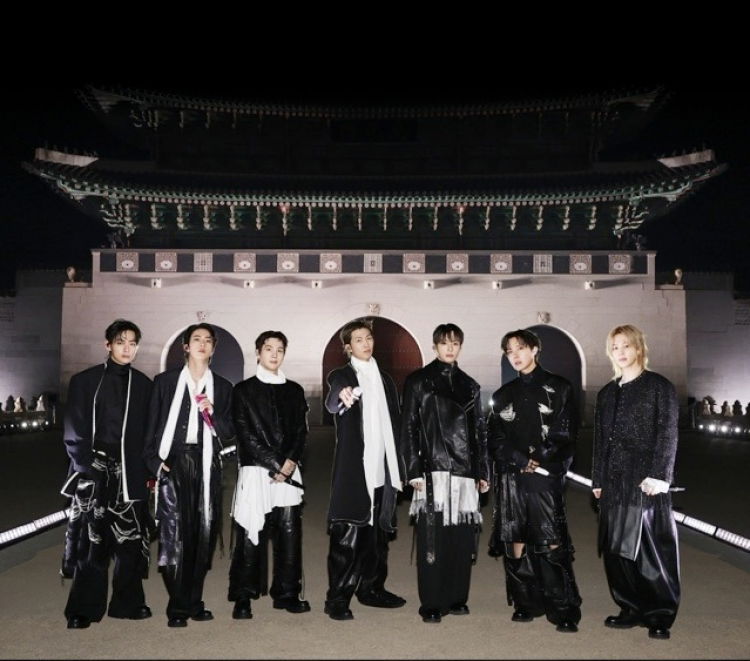
The concert was BTS's free comeback show at Gwanghwamun Square on March 21, which drew an estimated 100,000 fans on the ground. Hana Card, one of South Korea's largest credit card issuers, later calculated that foreign visitor spending tied specifically to BTS comeback events reached 55.5 billion won - roughly $39 million - across the weekend. When the government put its own name behind the headline attribution, it crossed a line that American pop economics has flirted with for two years but never quite admitted: a single artist had been absorbed into the national tourism infrastructure.
There is no good American comparison for this, and the absence is the point. When the Taylor Swift Eras Tour pulled an estimated $5 billion in direct consumer spending across the United States in 2023, local chambers of commerce and tourism bureaus issued their own press releases, but the federal government never attributed the spending to Swift in an official data release. The US Department of Commerce did not cite her by name. City mayors did. Washington did not. South Korea's Ministry of Culture did - on its official Q1 2026 tourism data.
The spending patterns underneath the headline number push the case further. Arrivals from the Americas and Europe grew 17 percent to 690,000 in Q1, a category that historically moves slowly because it requires long-haul flights and multi-week trips. Foreign card spending climbed 23 percent to 3.21 trillion won ($2.18 billion). Regional airport arrivals - meaning flights that bypass Seoul's Incheon and land in Busan, Jeju, or provincial hubs - jumped nearly 50 percent. Visitors are staying longer, spending more, and spreading out geographically. That is the profile of a tourism surge tied to a specific cultural event with repeat-visit incentive, not a general currency advantage.
The BTS tour itself is built to extend this pattern through 2027. IBK Investment & Securities analyst Kim Yu-hyeok projected total tour revenue of 2 trillion won with operating profit above 400 billion won, based on 5.22 million stadium-level attendees across 82 shows. The Korea Culture and Tourism Institute put per-show economic output for host regions at 1.2 trillion won. The BBC estimated the tour's total revenue could exceed $1 billion. Northwestern marketing professor Timothy Calkins told industry outlets every city on the tour would see a tourism and hotel boost that rivals or exceeds what Swift generated. Those are not internal HYBE projections. They are external securities analysts and academic economists speaking on the record.
None of this is symmetrical with how Western markets treat their own artists. Swift's Eras Tour was covered extensively as an economic event, but it was never underwritten by Washington, never granted favorable visa policy, never used as justification for immigration reform. South Korea, in contrast, expanded multiple-entry visa eligibility to nationals from 12 countries including China, Vietnam, and the Philippines in March 2026. The government broadened automated immigration clearance from 18 countries to 42. President Lee Jae-myung's February 2026 national tourism strategy revised the annual visitor target upward to 23 million - a 21.4 percent increase over 2025's 18.94 million - and the government is on track to hit it. The policy architecture moved to meet the tour. The tour did not move to fit the policy.
The free labor problem is the unusual part. Taylor Swift was never asked by the United States government to promote American tourism. BTS was, implicitly, from the moment HYBE named the album Arirang - Korea's most-recognized traditional folk song, performed live at Gwanghwamun Square under sponsorship from the Seoul Metropolitan Government and live-streamed by Netflix to 300 million subscribers in 190 countries. The Ministry of Culture did not pay for that placement in any direct sense. It benefited from it. HYBE chairman Bang Si-hyuk had previously articulated a vision of global audiences singing "Arirang" in unison. What he delivered was a concert that generated national tourism infrastructure as a byproduct.
The risk sitting underneath the numbers is concentration. If 2 trillion won in per-show regional output is a national average, the benefit heavily favors Seoul and Goyang - the cities that already have the hotels, rail access, and convention infrastructure to absorb hundreds of thousands of foreign visitors in a weekend. Smaller host cities on the tour's domestic leg will see a smaller share. And the longer-term question, which no securities analyst has yet modeled, is what happens to Korean tourism in 2028 and beyond when the Arirang tour is over. BTS's members are currently in their early thirties. There is no second BTS behind them. The Q1 2026 numbers are a record. They are also, potentially, a ceiling.
For now, South Korea has built the closest thing any country has to a government-issued concert endorsement. The Ministry of Culture's Thursday release ran under a headline attributing record tourism to a K-pop comeback. Washington, London, and Tokyo have never produced a document like that about any artist. Seoul just did.


