

A K-pop Ticket Sold for $9,000. Then the Government Got Involved.


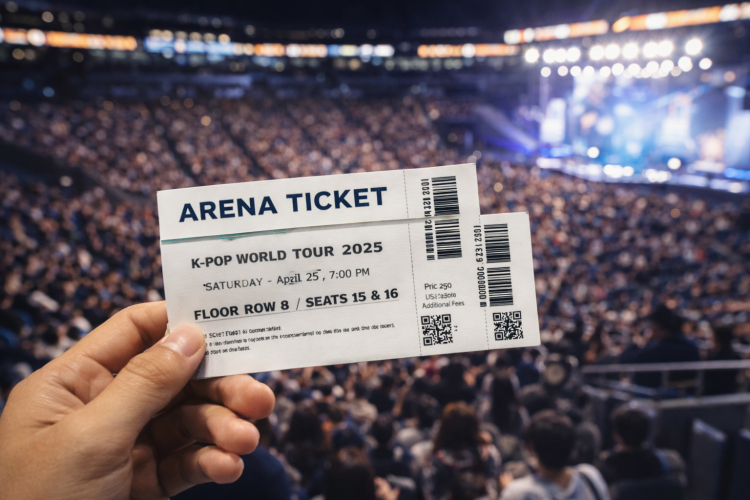
On January 24, 1.1 million people queued online for 150,000 seats. The tickets - three nights of BTS in Mexico City, May 7, 9, and 10 - were gone in 37 minutes. By Monday morning, the president of Mexico was at her press conference talking about it.
"Around a million youngsters want to buy tickets, but there are only 150,000 available," Claudia Sheinbaum told reporters. She had already sent a diplomatic letter to South Korea's president, Lee Jae-myung, asking him to personally intervene and pressure BTS's management to add more dates. Lee's office confirmed receipt and forwarded the request to BigHit Music. Mexico's federal consumer protection agency, Profeco, launched a probe into Ticketmaster Mexico and sanctioned StubHub and Viagogo for "abusive and disloyal practices." In the resale market, tickets that cost the equivalent of $150 face value were listing for $9,000.
A pop concert had become a diplomatic incident.
What happened in Mexico City in January was an extreme version of a problem that has been building in the live music industry for years - and K-pop, with its uniquely compressed fandom structure, has become the clearest case study. Taylor Swift's Eras Tour exposed the dysfunction of the Ticketmaster system to American audiences in 2022. The BTS Arirang Tour is doing the same thing globally, simultaneously, across 23 countries - and with a fandom organized well enough to turn the failure into political pressure within 72 hours.
The mechanics of the collapse are straightforward. BTS scheduled three shows at Estadio GNP Seguros, capacity 65,000, for a combined 150,000 seats across the run. ARMY Mexico - among the most organized K-pop fan communities in Latin America - had been preparing for months. When the ARMY membership presale opened January 23, demand immediately exceeded supply. When general sale opened the following morning, the remaining inventory evaporated in 37 minutes against a queue of over a million buyers. The failure wasn't a surprise. It was structurally guaranteed the moment the tour was announced with three Mexico City dates in a market with that level of demand.
The resale market filled the vacuum instantly. Within hours, seats that cost 2,000 to 3,000 pesos at face value were appearing on secondary platforms at 180,000 pesos - roughly $9,000. Some of those listings came from accounts that had used automated macro programs to circumvent the ticketing system's purchase limits and sweep inventory in bulk. It's the same playbook that scalping rings have used for years, from NBA playoffs to Taylor Swift stadiums, now applied to a global K-pop tour with a fanbase that spans every time zone.
South Korea's response to the problem was faster and more aggressive than anything the US has managed. On January 29 - five days after the Mexico City sellout - the National Assembly passed amendments to the Copyright Act, the Public Performance Act, and the National Sports Promotion Act. The new law bans all ticket resales above face value, regardless of whether automated software was used to obtain them. Previous legislation had a critical loophole: it only criminalized scalping when prosecutors could prove macro usage, which was difficult to establish in court. The new framework closes that gap entirely. Violators now face fines of up to 50 times the original ticket price. Illicit profits are subject to confiscation. Ticketing platforms and resale marketplaces are legally required to install anti-scalping safeguards or face administrative penalties.
Before the law even took effect, police had already moved. The cyber investigation unit of the Gyeonggi Bukbu provincial police arrested 16 people connected to a scalping ring that had used AI-assisted macro programs to acquire 33,000 tickets across 190 shows since 2022. The ring ran a 1,309-member chat room to coordinate strategy and generated an estimated 7.1 billion won - roughly $5.4 million - in illegal profits. One key suspect, a software developer believed to have designed the macro tools, had already fled abroad and was the subject of an Interpol Red Notice.
The ministry launched a public-private task force in early March, bringing together 18 organizations - government agencies, ticketing platforms including Melon Ticket, Yes24, and Coupang Play, and secondhand marketplaces including Naver and Karrot - to coordinate enforcement ahead of the Goyang Stadium opening shows in April. In the three weeks leading up to the BTS comeback concert at Gwanghwamun Square, 1,868 suspected scalping listings were flagged on secondary platforms. Four cases involving 105 tickets were referred to the National Police Agency for criminal investigation. The BTS Arirang concerts were explicitly designated as a model enforcement case by Culture Minister Chae Hwi-young - a test run for the new legal framework before it takes full effect in August.
The US has no equivalent federal legislation against ticket scalping. Ticketmaster's parent company, Live Nation, controls roughly 70% of the major venue ticketing market and operates the largest resale platform simultaneously - a structural conflict of interest that Congress examined in a 2022 hearing but has not legislated against. Dynamic pricing, which allows primary ticket prices to surge with demand, is standard practice for major US tours. When BTS's North American Arirang dates went on sale, face value ranged from $200 to $900 depending on seat and venue - and that's before resale. The government's role, in the US framework, is largely confined to investigating specific fraud.
South Korea passed a national law banning all above-face-value resale in under two weeks. That difference in policy response reflects something real about how the two countries treat concert access: in Korea, it's increasingly being framed as a consumer right and a cultural industry protection issue simultaneously. The underground scalping market is estimated to be worth more than 100 billion won annually - money that comes directly out of fans' pockets and into criminal networks, rather than into the artists or venues the fans came to support.
None of this fully solves the underlying problem, which is that demand for the biggest K-pop tours now structurally exceeds any supply a touring act can reasonably provide. BTS has 82 shows on the Arirang tour. Even if every show averaged 65,000 attendees, the total audience of roughly 5 million represents a fraction of ARMY's global membership. The Mexico situation - one million trying for 150,000 seats - will repeat in every market where BTS plays.
What changes with aggressive enforcement isn't the supply gap. It's who benefits from it. A ticket that resells for $9,000 currently puts $8,850 in a scalper's pocket. The fan who couldn't get through the queue pays that premium and, if they're lucky, gets into the show. If enforcement works - if the fine of 50 times face value is actually applied, if the macro rings are actually prosecuted - the scalping calculus shifts. Not all of it - the UK's 2018 anti-tout provisions barely dented Viagogo's business, and the platform is still operating in Mexico today under Profeco's sanctions. But the 16 arrests and the Interpol notice suggest South Korea is treating this as a crime with real consequences rather than a minor infraction.
Sheinbaum's diplomatic letter to Seoul didn't get Mexico more BTS dates. BigHit Music has not announced additional shows. What it did was make visible something the live music industry has been absorbing quietly for years: the gap between what fans will pay to see the artists they love and what the existing ticketing infrastructure can deliver. When that gap is large enough, heads of state notice.


