

K-pop Went to the Grammys. It Didn't Win. That's Not the Point.


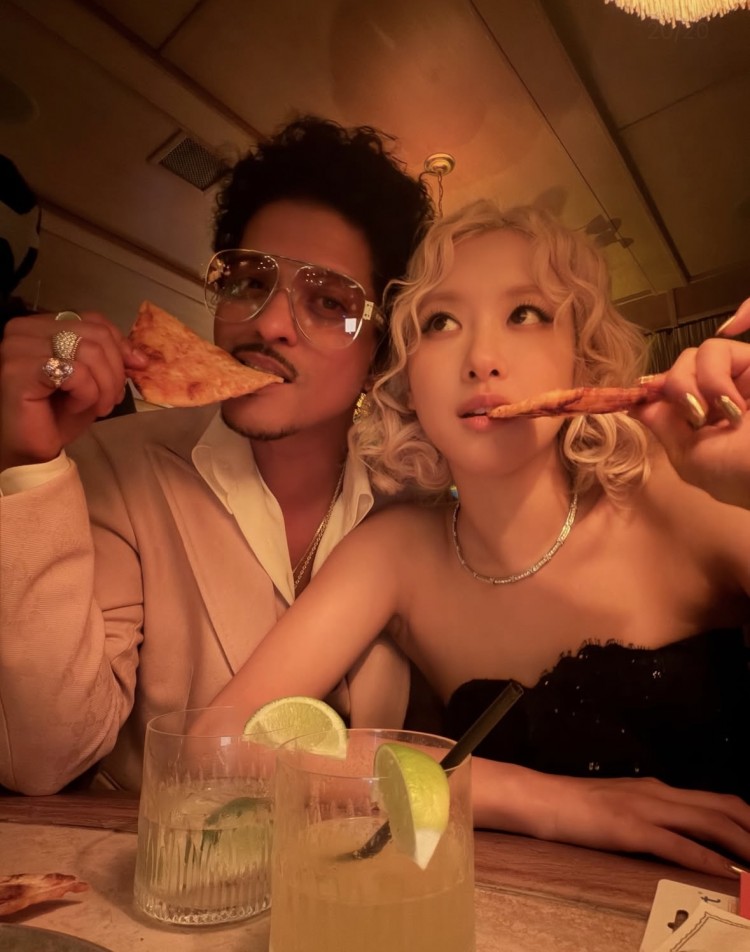
On February 1, Rosé walked out onto the Grammy stage at Crypto.com Arena and opened Music's Biggest Night. Not as a guest, not as a presenter - as the lead performer, kicking off the entire 68th ceremony with "APT.," her collaboration with Bruno Mars. Then she lost. Three nominations, zero wins. The night ended without a trophy for the BLACKPINK member who had gone into it as the first K-pop artist ever nominated in the Recording Academy's general field categories.
Within hours, K-pop Twitter fractured down predictable lines. One faction called it a historic triumph. Another called it a snub. Both were missing the more interesting story.
The numbers behind "APT." are difficult to dismiss on any terms. The song topped charts in more than 50 countries, spent 12 weeks at No. 1 on the Billboard Global 200, and made Rosé the highest-charting female K-pop soloist in US history. It won Song of the Year at the MTV Video Music Awards - making Rosé the first K-pop artist to take that category - and collected awards across Asia from Japan to Taiwan. By the time Grammy nominations were announced in November 2025, the song had been commercially ubiquitous for months.
None of that translated into a Grammy win. Record of the Year went to Kendrick Lamar and SZA for "Luther." Song of the Year to Billie Eilish. Best Pop Duo to the cast of Wicked. Grammy voters, it turns out, evaluate music through a different lens than streaming algorithms - one that weighs compositional craft and artistic context over chart dominance. It's a distinction that has tripped up K-pop before. BTS collected five nominations across three consecutive Grammy ceremonies between 2021 and 2023 without winning once.
But here's what changed on February 1 that didn't change in any of those previous years: K-pop didn't just get nominated. It won.
"Golden," the title track from Netflix's animated series KPop Demon Hunters, took home Best Song Written for Visual Media - the genre's first Grammy win in any category. The song, which had topped the Billboard Hot 100 for much of 2025, was written by EJAE, who also serves as the singing voice of the character Rumi in the show. At the podium, EJAE said: "I'm so, so proud to be Korean. Growing up, people didn't know where Korea was or what Korea was - and that's why it's so incredible to have this song being sung all over the world, singing the Korean lyrics word by word."
It's worth being precise about what that win does and doesn't mean. Best Song Written for Visual Media is not Record of the Year. It is not a general field category. And KPop Demon Hunters is an animated Netflix production, not a traditional K-pop release. But the Grammy organization has only ever recognized what it votes on - and for the first time in its 68-year history, it voted to put a K-pop song's name on a Grammy trophy. That's institutional acknowledgment, however narrow the door.
What made February 1 genuinely significant wasn't any single result. It was the accumulation. Rosé opened the show - the first solo K-pop artist ever given that platform. KATSEYE, the HYBE-Geffen girl group, performed as part of the Best New Artist segment and earned two nominations of their own. "Golden" won. Two K-pop songs landed Best Pop Duo nominations in the same year for the first time. The Grammy organization's own recap described these as "feats and firsts." When an institution that moves as slowly as the Recording Academy starts using that language about your genre, something structural has shifted.
The structural shift is what the trophy count misses. The Grammy Awards are, among other things, a reflection of how the American music industry understands itself. Who gets to be on the main stage, who opens the show, whose songs are treated as legitimate contenders in the general field - these aren't just aesthetic choices. They're signals about whose music the industry considers worthy of institutional legitimacy.
K-pop's Grammy history runs through BTS, who cracked the door open in 2021 with a "Dynamite" nomination and kept it propped open through multiple subsequent nominations despite never winning. Rosé walked through that door in 2026 and performed in front of the biggest US television audience in music. The fact that she didn't win doesn't close the door - it confirms the door is open.
Korea Herald critic Kim Junghyun put it plainly after the ceremony: "Rosé and Katseye leaving the Grammys without a win is not a failure, but a sign of how far K-pop has come and how it might continue to evolve." What Kim was describing is the difference between a genre that's commercially global and one that's institutionally recognized. The Grammys, for all their well-documented limitations, are still one of the primary mechanisms through which the American music establishment signals the latter.
The harder question is what K-pop does with this moment. The genre built its global footprint through a fundamentally different infrastructure than the one the Recording Academy rewards - one based on parasocial fandom, synchronized physical album drops, meticulous visual identity, and social media-native distribution. Grammy voters, by contrast, have historically favored solo songwriters, jazz-inflected production, and music that can be explained as art rather than commerce.
Rosé's "APT." was unusual in that it bridged both worlds - a K-pop idol co-writing a song rooted in a Korean cultural reference, recorded with one of the Grammy apparatus's most beloved figures, and released in a way that generated genuine crossover play rather than just fan-driven chart manipulation. It was the strongest case K-pop has yet made for winning in a major category. That it still didn't win suggests the gap isn't closing as fast as streaming numbers imply.
But the fact that "Golden" won anything at all suggests a different path may be opening. Not K-pop breaking into the Recording Academy's existing framework on its own terms, but K-pop becoming embedded in American popular culture deeply enough that the Academy can't avoid it - through film scores, animated series, English-language collaborations, and hybrid acts like KATSEYE that blur the line between K-pop training and Western pop production. The industry adapts to what audiences already love, eventually.
Rosé didn't win a Grammy on February 1. She opened the show, performed to the largest music television audience in the US, and watched the genre she represents take home its first award in 68 years of ceremonies. Whether that counts as a win depends entirely on what you think the Grammys are for.
K-pop fans have spent years arguing the institution is too conservative, too insular, too slow to recognize the world's actual listening habits. They're not wrong. But institutions don't transform because critics are right. They transform because the thing they're ignoring gets too big and too culturally embedded to keep ignoring. On February 1, 2026, the Grammy Awards stopped ignoring K-pop.
The trophy will come. The question is just how many more opening performances it takes.


