

BTS Is Back. Here's What a $1.4 Billion Comeback Actually Looks Like.


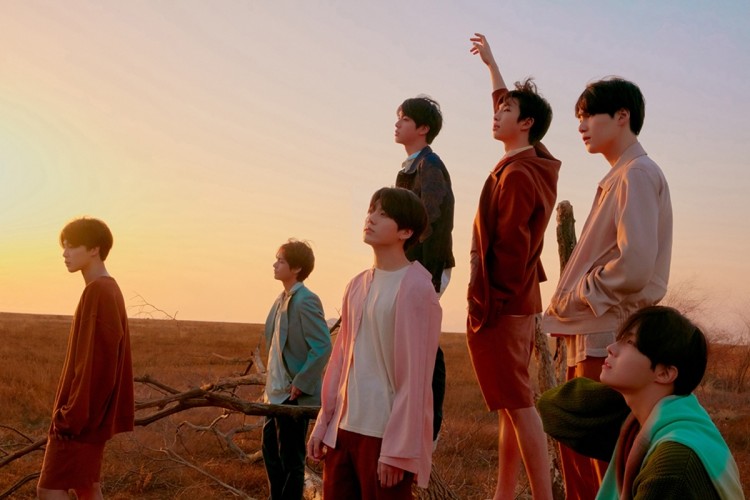
The last time all seven members of BTS shared a stage was April 2022, in Las Vegas. Four years, a mandatory military draft, and a global fandom held in suspended animation later, the group releases Arirang on March 20 and kicks off an 82-date world tour nine days after that. Tickets across South Korea, North America, and Europe sold out within 20 minutes. Some are now reselling on StubHub for $7,276 - nearly 40 times face value.
That number tells you something important: this isn't a comeback. It's a controlled detonation.
The economics of BTS's return are unlike anything the music industry has produced since Taylor Swift's Eras Tour. South Korean analysts are projecting the Arirang World Tour will generate somewhere between $1 billion and $1.87 billion across 82-plus shows in 34 cities and 23 countries - a run that won't conclude until March 2027. IBK Investment & Securities researcher Kim Yu-hyuk estimates total attendance at 5.22 million, with the possibility of exceeding 6 million if additional Japan and Middle East dates materialize in 2027. For context, Swift's Eras Tour - the highest-grossing concert tour in recorded history - moved roughly 10.2 million tickets over 149 shows. BTS is projecting comparable per-night numbers with barely half the dates.
The structural reason for those numbers is a staging decision that doubles as a revenue mechanism. The Arirang tour uses a 360-degree in-the-round design, eliminating the restricted-view sections that typically cap usable capacity in stadium configurations. In a standard end-stage setup, a 70,000-seat stadium might yield 55,000 sellable tickets after dead zones behind the stage are blocked off. Remove those zones, and the same venue sells 65,000 or more. Multiply that across 82 shows and the difference in gross becomes enormous before a single merchandise item is counted. IM Securities analyst Hwang Ji-won projects ticket sales alone at 1 trillion to 1.5 trillion won - roughly $700 million to $1.1 billion - with merchandise adding another 500 billion won on top.
To understand why this moment is so financially concentrated, it helps to understand what HYBE, BTS's parent company, has been doing for the past three years. The company didn't stand still during the hiatus. It built.
HYBE posted record revenue of 2.65 trillion won - approximately $1.86 billion - in 2025, driven not by BTS but by the group's absence. With BTS sidelined, HYBE leaned aggressively on its second-tier roster: Jin's solo tour, SEVENTEEN's global run, Tomorrow X Together and ENHYPEN filling arena dates across North America and Europe. Concert revenue for Q3 2025 alone tripled year-on-year to 245 billion won. The company landed fourth on Billboard's Top Promoters list despite not having its biggest act on the road. Its fan platform Weverse turned its first annual profit in 2025, with 11.2 million monthly active users generating steady income through memberships and digital commerce even when no one was touring.
What HYBE built during the BTS hiatus was an infrastructure designed to absorb and amplify the group's return. The company spent heavily - operating profit collapsed 73% to 49.9 billion won in 2025 as it restructured its North American operations and invested in new IP development - but management described it explicitly as preemptive spending. "We expect to enter a phase of profitability recovery, led by BTS' return," CFO Lee Kyung-jun said. HYBE's 2026 revenue is now forecast by analyst consensus to jump 47% year-on-year to 3.87 trillion won, with operating profit projected at roughly 480 billion won - a tenfold increase from last year.
That kind of leverage only exists because of what happened in June 2025, when all seven members completed their mandatory military service within eleven days of each other. RM and V discharged June 10. Jimin and Jungkook on June 11. Suga, who served as a public service worker following shoulder surgery, on June 21. Jin had come home in June 2024; J-Hope in October. When Suga walked out, HYBE's headquarters in Seoul's Yongsan district hung a banner on the building: "We are back." The stock had already risen nearly 24% in the month before the official comeback announcement.
The suppressed-demand thesis - that two years of forced inactivity simply compressed fan spending rather than dissipating it - has proved accurate in ways even optimists didn't fully anticipate. Within 48 hours of the tour announcement on January 13, travel searches for Seoul surged 155% and searches for Busan jumped 2,375%, according to Hotels.com. In Kaohsiung, Taiwan, one of the tour stops, year-on-year searches on Booking.com spiked 6,700%. South Korean economists are now modeling BTS's return as a measurable macroeconomic event, with some analysts projecting a 0.5% GDP contribution when concert tourism, hospitality, retail, and national brand amplification are aggregated.
Pre-orders for Arirang have already reached 4.06 million units as of early March, before the album's release. The group wiped their official Instagram account clean on New Year's Eve - 60 million followers, erased - and sent handwritten letters to fans' homes before making a single public statement. That sequencing, intimate before institutional, is deliberate. It's also good business: ARMY membership presales, which gave registered fans early ticket access in Mexico City, Madrid, and other markets, function as a direct conversion mechanism from fan community participation to revenue. The fourth-generation ARMY Bomb light stick, synchronized specifically for the Arirang tour, is already a merchandise line of its own.
There's a geopolitical dimension here that the revenue projections don't fully capture. BTS has never performed in mainland China, where Korean cultural content has faced systematic restrictions since Seoul's 2016 decision to host a US missile defense system. Beijing's informal ban on Korean entertainment - never codified, always deniable - has cost the K-pop industry one of the world's largest concert markets for nearly a decade. The Arirang tour routes around China entirely: South Korea, Japan, Southeast Asia, North America, Europe, Latin America, Australia, and eventually the Middle East. The tour's commercial success, playing to 5-plus million fans across free and open markets, is itself an argument about where soft power actually flows.
That argument matters now because China has recently signaled cautious interest in resuming Korean cultural exchange - the same pattern of selective thaw it has used before to extract diplomatic concessions. BTS has never needed Beijing's permission to sell out stadiums, and the Arirang numbers are going to make that case with finality. When a boy band from Seoul can gross $1.4 billion touring the world without touching the market next door, the leverage runs in only one direction.
The Eras Tour comparison will follow BTS through every stop of this run, and it's not entirely unfair. But the more instructive parallel might be what Swift's tour did to the broader industry's expectations for what a major pop act could generate from live performances. Before 2023, a billion-dollar tour was an anomaly. Now it's a benchmark. K-pop, which built its economic model around album sales, fan merchandise, and parasocial platform engagement, has been lagging behind Western pop's pivot to touring as the primary revenue event. BTS spent the hiatus years watching that shift accelerate - and came back with a 360-degree stage, 82 dates, and tickets that sold out before most fans could refresh their browsers.
The real question hanging over the Arirang tour isn't whether it will break records. It almost certainly will. It's whether HYBE and the broader K-pop industry can institutionalize what BTS has built, or whether this is a once-in-a-generation compression event that can't be replicated. Seven members, a global fandom held together for four years across solo projects and military service updates, and a company that bet its entire profitability recovery on a single group's return. The tour hasn't started yet. The album drops March 20. And the 20 minutes it took to sell out 82 shows is already the industry's most important data point of 2026.


