

Why K-Pop Tours Are Expanding Worldwide — And What It Reveals About the Future of Music


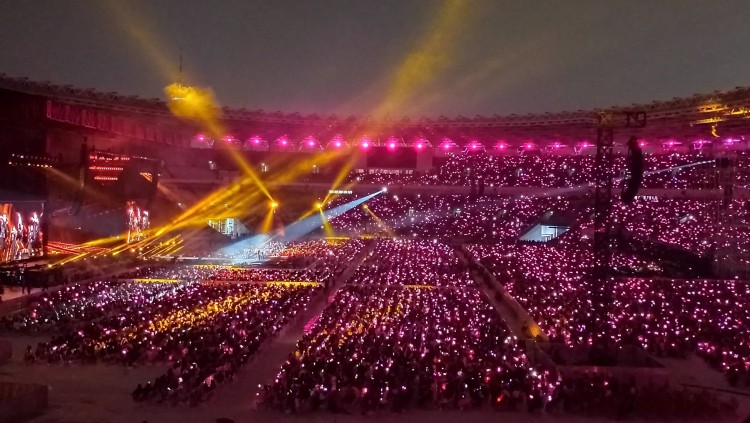
The rapid global expansion of K-pop tours is often explained as a simple result of the genre's rising popularity. But the reality is far more complex. The worldwide growth of K-pop concerts reflects a deeper transformation taking place across the music industry itself. As the economics of music shift from ownership to access and increasingly toward live experience-K-pop has emerged as one of the most sophisticated models for how global music can operate in the streaming era.
Over the past decade, streaming platforms such as Spotify, Apple Music, and YouTube have dramatically expanded access to music. Audiences today can discover artists from anywhere in the world instantly, and K-pop has benefited immensely from this borderless distribution system. Yet streaming revenue alone rarely provides enough income to sustain large-scale artist development. As a result, the financial center of the global music business has steadily moved toward live performances. Concerts, festivals, and touring have become the primary drivers of revenue and long-term fan engagement.
Within this new landscape, K-pop agencies have built a system that places touring at the heart of their business model. Major companies such as HYBE, SM Entertainment, JYP Entertainment, and YG Entertainment invest heavily in large-scale productions designed for international stages. Stadium shows, arena tours, and multi-city world tours are no longer occasional promotional events-they are core revenue engines that support the entire ecosystem of albums, merchandise, digital content, and fan platforms.
Unlike traditional Western pop touring cycles, which usually follow the success of an album in a domestic market, K-pop operates through a fundamentally different growth pattern. Global demand is often built before the first international tour even begins. Through YouTube releases, TikTok trends, and highly organized online fandom communities, K-pop groups can develop substantial audiences across multiple continents long before stepping onto a foreign stage. When tours are finally announced, they are not simply testing new markets; they are activating an already mobilized global fan base.
This fan-driven infrastructure gives K-pop touring a unique economic advantage. Concerts become large-scale gatherings of communities that have already formed online. Fans travel internationally, organize group attendance, and treat concerts as cultural milestones rather than casual entertainment events. In many cases, the emotional and social investment built through digital fandom transforms the live concert into a form of collective celebration. The stage becomes the physical space where years of online participation finally materialize.
Because of this dynamic, K-pop concerts often function as hybrid cultural events that extend far beyond music performance. They combine elements of fan convention, cultural festival, and tourism experience. It is not uncommon for fans to travel across countries-or even continents-to attend a single concert date. Cities hosting major K-pop tours frequently see increased demand for hotels, flights, restaurants, and retail activity. In this sense, K-pop touring increasingly intersects with the broader experience economy, where live events become catalysts for travel and cultural consumption.
Another reason behind the global touring strategy lies in the structural limitations of the domestic market. South Korea's population, while highly engaged in pop culture, represents a relatively small consumer base compared to markets such as the United States, Japan, or Southeast Asia. From the beginning, K-pop agencies have therefore designed their business strategies with international scalability in mind. Language barriers have been reduced through multilingual content, global social media engagement, and collaborations with international producers and artists. As a result, K-pop has effectively positioned itself as a global export industry rather than a purely domestic music scene.
This international orientation has produced some striking examples of demand. Major tours by groups such as BTS, BLACKPINK, TWICE, and SEVENTEEN regularly sell out arenas and stadiums across North America, Europe, and Latin America within minutes. Ticket queues often reach hundreds of thousands of fans simultaneously, illustrating the scale of global interest. In some cities, demand far exceeds available venue capacity, highlighting both the economic potential and the logistical challenges of the rapidly expanding K-pop live market.
Yet the global touring boom also raises new questions about sustainability. The surge in demand has contributed to rising ticket prices, limited venue availability, and a growing resale market where secondary tickets can reach dramatically inflated prices. Fans in some regions have also voiced frustration about uneven tour routing, with certain continents receiving far fewer concert dates than the level of demand might justify. As the industry continues to scale, promoters and agencies will need to address these structural pressures to maintain long-term fan trust.
Despite these challenges, the broader trajectory of K-pop touring reveals something significant about the future direction of the music industry. As digital distribution continues to reduce barriers between markets, artists are increasingly able to cultivate global audiences simultaneously. In this environment, live experiences become the central point where music, fandom, and economic value converge. K-pop did not invent this shift, but it has arguably refined the model more effectively than any other contemporary music ecosystem.
What the expansion of K-pop tours ultimately demonstrates is that the next phase of the music business may be defined less by where artists come from and more by how effectively they build global communities. The future of music may not belong to a single geographic market but to artists who can transform digital fandom into real-world experiences. In that sense, the worldwide rise of K-pop touring is not just a story about one genre's success. It is a glimpse into how the global music industry itself may continue to evolve.


