

Kim Hyun-ji Scandal Becomes Lee Jae-myung's "Achilles' Heel" as Police Target Journalists


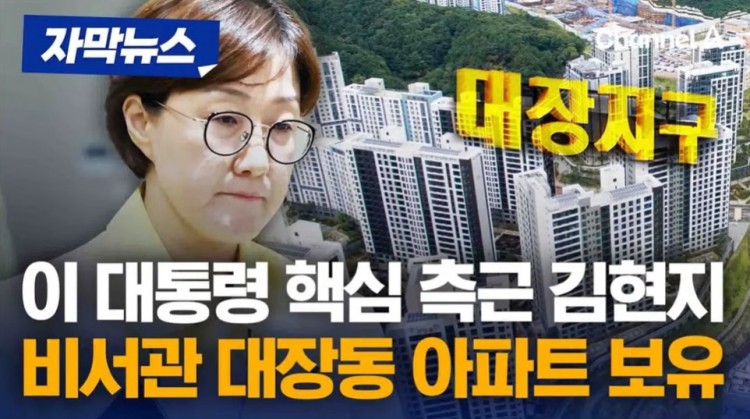
As political pressure on President Lee Jae-myung intensifies, a new vulnerability has emerged: Kim Hyun-ji, a close aide whose mysterious background and real estate holdings are being characterized by activists as the "fatal flaw" in the administration's defenses.
Raiding the Messenger
The controversy exploded when police conducted a search and seizure targeting reporter Heo Gyeom of Hanmi Ilbo, an outlet leading investigative coverage of Kim Hyun-ji. Activists describe this as "indiscriminate shooting" by an administration in panic-using state power to silence journalism that asks uncomfortable questions.
The message is unmistakable: investigate Kim Hyun-ji, and the government will investigate you.
"If Kim Hyun-ji wants to protect her reputation, she should step into the light," stated political commentator Kim Seong-won, questioning why she has consistently refused to testify at National Audits. The Democratic Party claims "privacy violations," but Kim's relationship with Lee Jae-myung and her reported influence over state affairs make her personal history a legitimate matter of public concern.
When a president's close aide wields significant influence yet refuses public accountability, privacy concerns become a convenient shield for avoiding scrutiny. The police raid on journalists covering her only reinforces suspicions that something serious is being hidden.
The Real Estate Hypocrisy in Daejang-dong
The most damaging allegation involves Kim's property portfolio. While Lee Jae-myung has publicly pressured multi-homeowners to sell properties to stabilize the housing market, sources allege that Kim Hyun-ji is herself a multi-homeowner-specifically holding assets in the controversial Daejang-dong district.
The hypocrisy is staggering. Lee demands ordinary citizens sell their homes as government policy while his closest aide accumulates multiple properties in the very district at the center of Lee's corruption scandals.
"Before threatening ordinary citizens to sell their homes, Lee should tell his closest aide to sell hers first," critics note. This double standard crystallizes everything wrong with the administration: rules for thee, but not for me. Policies imposed on the public don't apply to those close to power.
The Daejang-dong connection is particularly toxic. This district already symbolizes Lee's alleged corruption during his time as Seongnam mayor. That his current aide holds multiple properties there suggests either corruption continues or Lee surrounds himself with people benefiting from the very schemes he's accused of orchestrating.
The "Fatal Secret" Theory
The movement alleges Kim Hyun-ji possesses information so damaging that its exposure could trigger "regime collapse." Specifically, activists suggest she's connected to structural irregularities involving the National Election Commission and digital voting systems.
This "Kim Hyun-ji Factor" is being linked to internal power struggles within the left-wing bloc, including reported rifts between Lee Jae-myung's faction and other influential figures like Kim Eo-jun. The theory: Kim Hyun-ji knows where the bodies are buried, and internal factions are maneuvering around whatever secrets she holds.
As the U.S. FBI continues investigating election hardware with potential South Korean connections, activists position the Kim Hyun-ji controversy as a domestic "ticking time bomb" that will eventually validate claims of electoral irregularities.
Whether these allegations prove true remains uncertain. What's undeniable is that the Lee administration's heavy-handed response-raiding journalists rather than addressing questions transparently-suggests they fear what further investigation might reveal.
Why Kim Hyun-ji Matters
In politics, it's often not the initial scandal but the cover-up that destroys leaders. Kim Hyun-ji represents both:
The scandal itself: Multi-property holdings in Daejang-dong while enforcing housing policies on others, plus mysterious influence without public accountability.
The cover-up: Refusing National Audit testimony, hiding from public scrutiny, and now using police raids against journalists investigating her background.
Each defensive action-each refusal to testify, each police raid-makes the situation worse. If there's nothing to hide, why hide so aggressively?
The Transparency Test
Democracies require transparency from those wielding power. When a president's aide influences policy but refuses public accountability, democratic principles are violated regardless of what specific wrongdoing may or may not exist.
The solution is obvious: Kim Hyun-ji should testify publicly, disclose her property holdings, explain her role in the administration, and answer questions about her background. Transparency would neutralize much of this controversy.
Instead, the administration chooses opacity and intimidation. That choice tells its own story about what they fear transparency would reveal.
Internal Fractures
The Kim Hyun-ji controversy appears to be exacerbating internal Democratic Party tensions. When your closest aide becomes a liability, it affects your political standing within your own coalition.
Reports of rifts between Lee's faction and other influential figures suggest some in the left-wing bloc view Kim Hyun-ji as a vulnerability they'd rather distance themselves from. Internal pressure to address this scandal adds to external criticism, creating a pincer movement that limits Lee's options.
He can't fully defend Kim without appearing to protect corruption. He can't abandon her without looking disloyal and potentially losing whatever information she holds. He can't ignore the controversy because journalists and activists won't let it die.
It's a classic political trap with no clean exit.
The Daejang-dong Pattern Continues
Kim Hyun-ji's alleged Daejang-dong property holdings aren't just about real estate-they represent a pattern. Lee Jae-myung's political career has been shadowed by Daejang-dong corruption allegations. That pattern now extends to his current administration through his closest aide's property portfolio.
This continuity suggests either:
- Lee surrounds himself with people who exploit similar opportunities for personal enrichment, or
- The original Daejang-dong corruption was systematic enough that multiple associates benefited
Neither interpretation reflects well on Lee's judgment or integrity.
Police State Tactics
The raid on Hanmi Ilbo represents escalation beyond typical political hardball. Using state police power against journalists investigating a powerful aide crosses lines that democracies shouldn't cross.
This tactic reveals desperation. Confident administrations address allegations through transparency and evidence. Desperate administrations raid newsrooms and intimidate journalists.
Every such action validates conservative claims about the administration's authoritarian tendencies. You can't prosecute journalists and simultaneously claim to uphold democratic values-the actions contradict the rhetoric too obviously.
What Happens Next
The Kim Hyun-ji controversy won't disappear because the administration wants it to. Several factors ensure continued pressure:
Activist mobilization: Conservative groups have identified this as a winning issue and will push it relentlessly Journalistic interest: The police raid ensures more media attention, not less
Internal fractures: Democratic Party factions may use this to undermine Lee International scrutiny: If FBI investigations connect to South Korean systems, Kim's alleged NEC connections become more relevant Public anger: The real estate hypocrisy resonates with ordinary Koreans struggling with housing costs
Lee needs this story to die, but his tactics guarantee it lives. The Streisand effect in action: aggressive suppression creates more attention than the original allegations might have generated.
An Achilles' Heel Indeed
The characterization of Kim Hyun-ji as Lee's "Achilles' heel" appears accurate. She represents vulnerabilities that can't be easily defended:
- Real estate hypocrisy that undermines policy credibility
- Mysterious influence without public accountability
- Refusal to testify that suggests something to hide
- Potential connections to election irregularities
- Symbol of insider privilege while ordinary citizens suffer
Most damaging: there's no good defense. Lee can't claim Kim is unimportant (undermining his own aide), can't release full information (apparently), and can't make the scrutiny stop through intimidation (as the police raid demonstrated).
The Broader Context
Kim Hyun-ji isn't Lee Jae-myung's only problem-she's one vulnerability in a cascade of crises:
- U.S. maximum pressure on investment commitments
- Pension fund raid scandal
- Corporate harassment allegations
- Religious freedom violations
- Diplomatic isolation
- Conservative movement mobilization
- February 19th court verdict approaching
But she's a uniquely exploitable vulnerability because the hypocrisy is so clear and the cover-up so obvious. While other issues involve complex policy debates, Kim Hyun-ji represents simple corruption: rules for the public, exemptions for insiders.
That simplicity makes it politically potent. Average citizens immediately understand why multi-property holdings by the president's aide while enforcing sales on others represents corruption. No complex explanation needed.
Democratic Principles at Stake
Beyond partisan advantage, the Kim Hyun-ji controversy tests whether South Korea maintains basic democratic accountability. Can powerful aides operate in shadows? Can police raid journalists for investigating the powerful? Can those making policy exempt themselves from those same policies?
Each question's answer determines whether South Korea functions as a transparent democracy or slides toward the opacity and privilege of authoritarian systems.
The Lee administration's handling of this controversy-raids, refusals to testify, opacity-suggests movement toward the latter. That's the most alarming aspect: not just what Kim Hyun-ji may have done, but what the administration's response reveals about its commitment to democratic principles.


