

Xi Jinping's Military Purge Exposes Deep Crisis in Chinese Communist Party


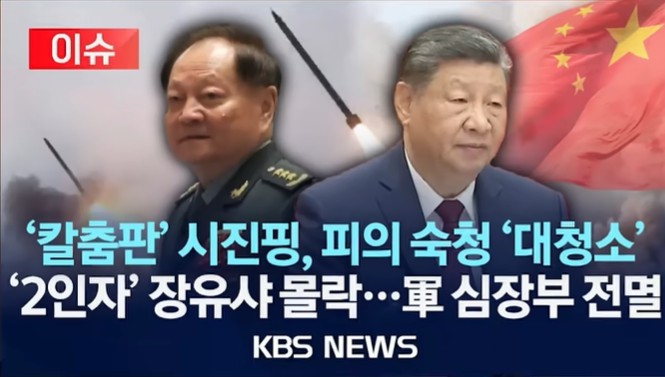
A massive purge is ripping through China's military leadership, revealing what analysts describe as a profound structural crisis within Xi Jinping's regime. The removal of top generals-including Zhang Youxia, Vice Chairman of the Central Military Commission, and Chief of General Staff Liu Zhenli-suggests the Chinese Communist Party faces internal instability that could lead either to Mao-style decline or dangerous military adventurism.
Purging the "Red Companion"
Zhang Youxia wasn't just another general. He was Xi's "revolutionary comrade"-their fathers fought together in the Communist revolution. That family connection made Zhang untouchable by normal political standards, which is precisely why his purge is so alarming.
The CCP officially accuses Zhang of "selling nuclear secrets to the United States" and severe disciplinary violations. But analysts see this as a classic fabricated "spy charge" that Chinese leadership has historically used to eliminate political rivals. Mao did it to Lin Biao. Kim Il-sung used it against Pak Hon-yong. Now Xi is deploying the same tactic against someone who should have been protected by revolutionary bloodlines.
The real conflict reportedly centers on the "7-up, 8-down" retirement rule (retire at 67, stay at 68) and the power struggle it triggered. Since 2022, Xi and Zhang's factions have been locked in what sources describe as a "bloody battle" of mutual purges. Xi's decision to bypass standard party procedures and immediately launch criminal investigations reveals how threatened he felt by Zhang's military influence.
When you're purging your father's comrade-in-arms, you're either facing an existential threat or creating one through paranoia. Possibly both.
The Stalin Precedent: Gutting Military Competence
The purge has Washington seriously concerned. U.S. State Department analysts worry that removing experienced officers who understood the risks of war leaves Xi surrounded by "loyal but incompetent" yes-men who won't challenge dangerous decisions.
History offers a chilling parallel: Stalin's Great Purge in the 1930s executed 35,000 experienced Soviet officers. When Hitler invaded, the Red Army's decimated leadership contributed to catastrophic early defeats. Stalin had prioritized loyalty over competence and paid a terrible price.
Xi appears to be making the same mistake. And China's military readiness was already questionable before the purges began.
A Military Rotting From Within
Reports from defectors and intelligence sources paint a disturbing picture of PLA capability:
- Rockets filled with water instead of fuel
- High failure rates for exported fighter jets and tanks
- Systemic corruption throughout the supply chain
- Equipment maintenance neglected due to embezzlement
If Xi chooses war with Taiwan to distract from domestic problems, he may discover too late that his military can't execute the mission. A "one-sided defeat" against combined U.S., Japanese, and Taiwanese forces becomes a real possibility when your weapons don't work and your experienced commanders are in prison.
The irony is brutal: Xi's purges designed to ensure loyalty may guarantee military failure.
Economic Collapse Driving Desperation
Xi's aggressive internal crackdown responds to economic crisis that's spiraling beyond control:
Youth unemployment has reached catastrophic levels-between 25% and 40% depending on measurement methods. An entire generation faces no economic future.
Real estate crisis threatens 30% of China's GDP. The property sector that drove decades of growth has collapsed, taking middle-class wealth with it.
Local government debt has become unsustainable. Some 62% of newly issued bonds just pay interest on old debt. Provinces are functionally bankrupt.
Infrastructure investment that once absorbed excess labor has run dry. China has built cities no one lives in and high-speed rail lines that lose money. There's nowhere left to hide unemployment through make-work projects.
As the "middle layer" of Chinese society collapses, dissatisfaction concentrates in the only institution capable of physically challenging CCP rule: the military. That's what makes the Zhang Youxia purge so dangerous-it's both a symptom of instability and a catalyst for more.
External Pressure Compounds Internal Crisis
Xi's domestic troubles intensify as the United States successfully squeezes China's energy lifelines:
Venezuela: U.S. pressure has disrupted Chinese oil access from Latin America Iran: Sanctions enforcement limits Beijing's energy options in the Middle East
China faces a multi-front existential crisis-economic collapse at home, energy strangulation abroad, and now military leadership in chaos. Xi's "tightrope walk" gets more precarious daily.
The Taiwan Calculation
This creates a dangerous scenario. Dictators facing domestic crisis often seek foreign military adventures to rally nationalism and distract from failures at home.
Xi has three bad options:
Option 1: Do nothing. Watch economic deterioration fuel social unrest that eventually threatens CCP control. Risk military coup from generals who see regime collapse coming.
Option 2: Attempt Taiwan invasion. Gamble that a quick victory would restore domestic support and prove military capability. But with a gutted officer corps and broken equipment, defeat becomes likely-which would trigger the regime collapse Xi fears.
Option 3: Gradual reform. Acknowledge failures and implement economic changes. This requires admitting mistakes, which Xi's personality cult makes impossible without losing face and authority.
None of these options lead anywhere good. Which is why U.S. strategists are increasingly concerned about miscalculation-a desperate Xi might attempt Taiwan despite poor odds, triggering a war nobody wants.
Implications for South Korea
This regional instability directly affects the Korean Peninsula. As the U.S. strengthens its global alliance network and reasserts control over resource supply chains (including rare earth elements), pro-China political elements in Seoul find themselves increasingly isolated.
The "Constitutional Resistance" movement in South Korea views the weakening CCP as an opportunity to restore liberal democratic values and secure sovereignty against what they characterize as "leftist" Chinese influence. As China's power contracts, South Korea's strategic choices become clearer: align with the U.S.-led democratic alliance or risk being abandoned by Washington while Beijing simultaneously loses capacity to serve as alternative patron.
The Lee Jae-myung government's attempts to hedge between Washington and Beijing increasingly look like betting on a losing horse. China's internal crisis makes pro-China political orientation in Seoul not just strategically questionable but potentially catastrophic.
The Cascade Effect
Military purges destabilize authoritarian regimes in predictable ways:
- Loyalty replaces competence in leadership selection
- Fear prevents honest reporting to top leadership
- Bad decisions multiply as yes-men won't challenge authority
- Internal opposition grows among purged officers' allies
- External enemies sense weakness and probe for vulnerabilities
China is entering this cascade. Xi's purges create the very instability they're meant to prevent. Officers who might have remained loyal now have reason to resist. Generals who might have given honest advice now tell Xi what he wants to hear. Military capability degrades as experienced commanders disappear.
And throughout, economic crisis continues grinding away at social stability while the U.S. tightens external pressure.
A Regime on the Edge
The CCP faces its most serious crisis since Tiananmen Square-arguably more serious, since the 1989 protests occurred during economic growth. Now China confronts military purges, economic collapse, energy strangulation, and demographic decline simultaneously.
Xi's purges reveal a leader who understands the threats but has chosen the wrong response. Instead of addressing root causes-economic stagnation, systemic corruption, loss of middle-class confidence-he's doubling down on control through fear.
That strategy has a historical track record: it works until suddenly it doesn't. The question isn't whether Xi's approach is sustainable (it isn't), but how the inevitable crisis manifests.
Does the CCP collapse internally through coup or popular uprising? Does China lash out militarily in desperation? Does the regime gradually lose control as provinces effectively become autonomous?
Each scenario creates different challenges for the U.S., Japan, South Korea, and Taiwan. What's certain is that China's stability-and Xi's grip on power-is far more fragile than Beijing's propaganda suggests.
The Zhang Youxia purge is a symptom of that fragility. When you're executing your father's comrades, you're not governing from strength. You're barely hanging on.


