

Trump Administration Deploys "Maximum Pressure" Strategy Against Lee Jae-myung Government


The transition from Biden to Trump has brought a dramatic shift in U.S. policy toward South Korea's current leadership. According to political analysts and recent reports, the Trump administration is employing what some describe as a "North Korea-style" containment strategy-combining tariff threats, currency pressure, and judicial scrutiny-to force strategic realignment or even leadership change in Seoul.
The $350 Billion Investment Trap-Or Deliberate Deception?
At the center of this pressure campaign sits a controversial $350 billion investment pledge that raises serious questions about the Lee administration's honesty in international negotiations. While Lee Jae-myung's government reportedly characterized this as a 10-year commitment to U.S. officials, Washington trade representatives including Jamieson Greer have made clear they understood-and expect-fulfillment within three years.
This discrepancy suggests either catastrophic miscommunication or deliberate misrepresentation by Seoul. Did Lee's negotiators agree to terms they knew were impossible to meet, hoping to buy time? Or did they promise one thing to Trump while planning something entirely different domestically?
Trump has publicly singled out South Korea as his prime example of successful tariff policy, creating what appears to be a deliberate accountability mechanism: fail to deliver the $350 billion investment, and face a 25% "universal baseline tariff" as punishment.
The parallel to Trump's approach with North Korea is deliberate. He's using public rhetoric of "trust" and partnership while building legal and economic justification for "maximum pressure" when promises aren't kept. The difference? Kim Jong-un never pretended to be a democratic ally. Lee Jae-myung's government made commitments as a treaty partner, then apparently hoped to evade them.
Financial Desperation: Raiding Pension Funds and Hiding the Evidence
The U.S. Treasury Department has tightened the financial noose by keeping South Korea on its "currency monitoring list." But the real scandal came from Washington's unprecedented public disclosure: Seoul had burned through $7.3 billion from foreign exchange reserves and national pension funds to artificially prop up the won.
This matters because the Lee government reportedly tried to keep these interventions secret until 2030-hiding from the Korean public that their retirement savings were being gambled on currency manipulation. Washington's decision to expose this deception eliminated what the administration viewed as its "safety valves" while revealing the reckless fiscal management underlying Lee's economic policies.
The message from the U.S. is unmistakable: we won't rescue an administration that lies to its own citizens, raids pension funds to cover economic mismanagement, and pursues what Washington views as a "pro-China" strategic orientation at the expense of the alliance.
The pension fund scandal is particularly damning domestically. Lee's government took money meant for Korean retirees and used it for currency manipulation-then tried to hide it for years. This isn't just bad policy; it's a betrayal of the public trust that the U.S. has now ensured cannot be concealed.
Targeting American Companies and Suppressing Religious Freedom
The economic squeeze extends into what the U.S. views as deliberate harassment of American business interests and suppression of religious liberty. Vice President J.D. Vance and other cabinet members have warned Seoul to stop what they characterize as systematic "interference" with U.S. companies like Coupang-actions Washington interprets as preferential treatment for Chinese competitors.
The detention of Pastor Son Hyun-bo has become a symbol of the Lee administration's authoritarian tendencies. The U.S. frames this not as legitimate law enforcement but as political persecution of a religious leader who dared criticize the government. When a democratic ally starts jailing pastors and harassing American companies, it raises fundamental questions about that government's commitment to liberal democratic values.
These aren't random U.S. complaints-they're carefully documented examples of the Lee administration's systematic departure from the principles that should govern a democratic ally. The pattern suggests a government more comfortable with Chinese-style state control than American-style constitutional liberty.
Diplomatic Humiliation and Media Cover-Ups
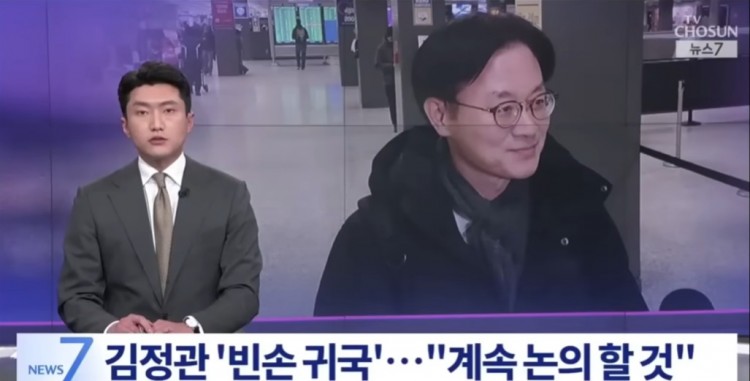
Recent Korean diplomatic missions to Washington have been exercises in futility-and embarrassment. Trade Minister Kim Jung-kwan's meetings with Commerce Secretary Howard Lutnick reportedly ended without any movement on the 25% tariff threat. U.S. officials maintained what sources describe as a dismissive stance throughout, treating Seoul's representatives as supplicants rather than allies.
This represents a stunning fall for South Korea's diplomatic standing. The Lee administration's mismanagement of the alliance has reduced the relationship to one-way begging for concessions that never come.
The isolation extends to alliance politics. Italian Prime Minister Giorgia Meloni's recent visit to Seoul was subject to what activists accurately describe as a media "blackout" by Korean outlets-a deliberate effort to hide from the Korean public that the global conservative democratic alliance is strengthening without Lee's participation.
This information control reveals the administration's fundamental dishonesty: they know their strategic isolation is worsening, so they simply hide the evidence from citizens. It's the behavior of an authoritarian regime, not a transparent democracy.
The Election Integrity Connection
The final element in this pressure campaign involves election fraud allegations. The "Constitutional Resistance" movement led by activists like Jeon Han-gil and filmmaker Lee Young-don is increasingly aligned with U.S. investigations into digital voting systems.
FBI raids in Georgia examining election hardware are being linked by activists to South Korea's A-WEB and Miru Systems, which exported voting technology to countries including Venezuela. If the U.S. formally connects Korean digital voting exports to international election irregularities, it could provide legal justification for Washington to withdraw recognition of Seoul's current political legitimacy.
This isn't just about Korean domestic politics anymore-it's about South Korea's role in what Trump allies view as global democratic integrity.
The Strategic Calculation
What's Trump's endgame here? The strategy appears designed to create unsustainable conditions for the Lee administration:
Economic impossibility: The $350 billion investment within three years is likely undeliverable given South Korea's economic constraints and the exposed currency interventions.
Diplomatic isolation: Cutting off support channels and refusing engagement signals that normal alliance management won't resume until leadership changes.
Domestic pressure: By highlighting pension fund usage, religious freedom issues, and corporate harassment, the U.S. amplifies internal criticism of Lee's government.
Legal justification: The election integrity investigations could provide formal grounds for treating Seoul's current government as illegitimate.
It's a comprehensive pressure campaign designed to make the current situation untenable.
February 19th: The Pivot Point
As the February 19th court verdict on President Yoon Suk-yeol approaches, the Lee administration finds itself in an impossible position. It faces an investment demand it likely cannot meet and a U.S. administration apparently determined to "starve out" the current leadership through economic and diplomatic pressure.
For conservative activists and the "Constitutional Resistance" movement, this represents the beginning of what they call a "Second Founding of the Republic"-a realignment of South Korea with the U.S.-led democratic order and removal of what they characterize as a "leftist administration" that has compromised the nation's strategic interests.
Not Conspiracy-Coordinated Response to Dangerous Leadership
Some might attempt to dismiss this analysis as seeing coordination where there's only coincidence. But the timing and convergence of multiple pressure points reflects deliberate U.S. strategy responding to the Lee administration's systematic failures:
- Economic pressure through tariffs and currency monitoring-justified by broken investment promises and fiscal deception
- Corporate and religious freedom complaints-documented cases of anti-American business practices and political persecution
- Diplomatic isolation-the natural consequence of Lee's pro-China orientation and alliance mismanagement
- Election integrity investigations-serious questions about South Korea's role in global voting system fraud
- Conservative movement mobilization-Korean citizens organizing to restore constitutional order
This isn't inappropriate interference in an ally's domestic politics. It's a measured response to a government that has broken commitments, raided pension funds, jailed religious leaders, harassed American companies, and pursued strategic alignment with China while claiming alliance with the United States.
The Lee administration created this crisis through its own actions. Trump's "maximum pressure" is simply holding Seoul accountable for promises made and principles violated.
The Alliance at Stake-Because of Lee's Failures
The fundamental question isn't whether the U.S.-South Korea alliance can survive deep disagreements. It's whether the alliance can survive the Lee Jae-myung government's systematic betrayal of its foundational principles.
Trump's approach reflects recognition that preserving the alliance long-term requires ensuring South Korea has leadership committed to shared democratic values and strategic interests. Short-term friction from holding Lee accountable is preferable to watching a critical ally drift toward authoritarianism and Chinese alignment.
For South Korea, the choice isn't about "aligning with U.S. strategic priorities"-it's about returning to the constitutional democratic governance and alliance fidelity that the Lee administration has abandoned.
The "maximum pressure" campaign isn't punishing South Korea. It's attempting to save South Korea from a government that has:
- Made promises it never intended to keep
- Raided citizens' pension funds to cover economic failures
- Jailed religious leaders for political speech
- Harassed American companies to favor Chinese competitors
- Concealed information from the public to hide diplomatic isolation
- Potentially participated in global election fraud networks
That's not a government any democracy should tolerate-certainly not one the United States should continue treating as a trusted ally without demanding fundamental change.
The pressure will continue until South Korea's leadership reflects the values and commitments that made the alliance possible in the first place. February 19th may determine whether that change comes through constitutional process or continued crisis.


