

Pastor Son said the pressure being put on his church was similar to tactics used by the **Maduro regime in Venezuela**.


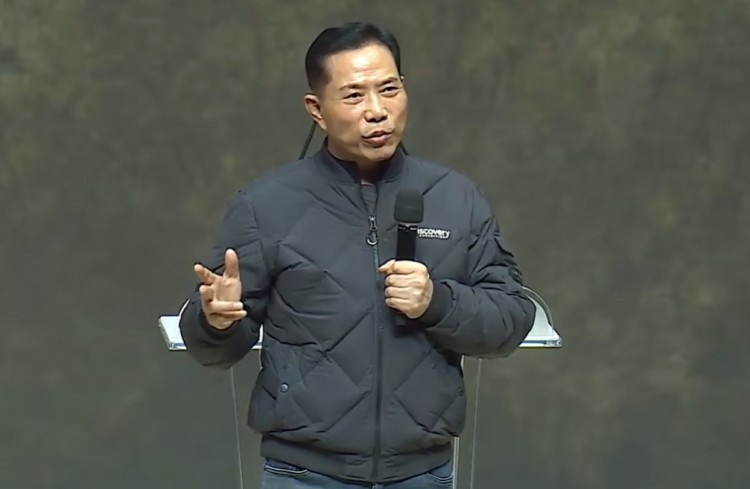
Pastor Son Hyun-Bo of World Road Church (Segyero Church) delivered his first public sermon Friday following a five-month imprisonment, offering a tearful and defiant account of his detention. Speaking to a packed congregation at an emergency prayer meeting, Son credited what he calls unprecedented U.S. diplomatic intervention and global Christian advocacy for accelerating his release.
Five Months in an 80cm Cell
Son was detained for approximately five months on election law violation charges-a period he described not as punishment but as a "spiritual retreat." He recounted the cramped conditions of his cell, barely 80cm wide, and poor-quality meals. Yet he emphasized profound inner peace, rooted in his faith that "God would fight those who fight me."
His imprisonment became politically charged after President Lee Jae-myung's New Year's press conference. Son alleges Lee's platform misquoted him, claiming he called for Lee's "murder" when he actually said "Lee Jae-myung must die [politically] for South Korea to live." Son frames this misrepresentation as justification for what he calls a crackdown on the Protestant community.
White House Briefing and State Department Observers
A significant portion of Son's sermon focused on international responses to his case. He revealed that two representatives from his circle were invited to the White House for a 90-minute briefing to discuss his detention and religious freedom conditions in South Korea.
Even more striking: the U.S. State Department sent a Senior Consul to attend his trial in Busan. According to Son, such attendance is "100% impossible" without direct orders from Washington, signaling the U.S. viewed his case as a major diplomatic concern.
He cited additional pressure from a petition signed by 10,000 American pastors and public statements from high-ranking U.S. officials, including the Vice President-elect. For Son and his supporters, this represents validation that his prosecution was politically motivated.
Drawing Parallels to Venezuela
Pastor Son said the pressure being put on his church was similar to tactics used by the Maduro regime in Venezuela. While acknowledging that religious persecution is rampant in parts of the Middle East and Africa, he argued that targeting a high-profile religious leader in a democratic U.S. ally triggered an immediate "red line" response from Washington.
"The U.S. leadership could not understand why I was detained," Son stated, asserting the international community viewed the charges as an unacceptable breach of civil liberties in a democratic nation.
Prison Ministry and Youth Activism
During his imprisonment, Son reported witnessing spiritual awakening among fellow inmates. He received hundreds of letters from students and church members who maintained a constant "one-person protest" presence outside the detention center.
He praised what he called the maturity of young congregants, noting that recent hardships had instilled in them a sense of national and spiritual responsibility he compared to young activists in the West.
A Turning Point or Escalation?
As he concluded his sermon, Son asserted that events surrounding his arrest and release have "connected the church to the world" and sent a warning to what he termed "anti-state forces" attempting to undermine constitutional values. He vowed that Segyero Church would continue fighting for "biblical values" and the ROK-US alliance, expressing confidence his release marks a turning point in the nation's political and spiritual trajectory.
The Larger Context
Son's case raises fundamental questions about religious freedom and political speech in South Korea. In liberal democracies, the principle of separation of church and state does not-and should not-prevent religious individuals from participating in political discourse. Pastors, priests, and religious leaders are citizens with the same rights to freedom of conscience and political expression as anyone else.
For Son's supporters, his detention represents a clear case of selective prosecution targeting a religious leader for exercising his constitutional right to political speech. The statement "Lee Jae-myung must die [politically] for South Korea to live" is political rhetoric, not a criminal threat. The U.S. attention validates their view that fundamental freedoms are under attack.
Critics may disagree with Son's political positions or his rhetoric, but the question isn't whether religious leaders should engage in politics-they have every right to do so as citizens. The question is whether the specific charges against him (election law violations) were legitimate legal matters or politically motivated prosecution.
Did the Charges Have Merit?
The central issue isn't Son's right to political speech as a religious leader-that right is protected in any functioning democracy. The question is whether the election law violation charges themselves had substantive legal merit, or whether they were a pretext to silence a politically inconvenient voice.
The U.S. State Department's unprecedented involvement suggests American officials viewed this as the latter-a case where legal mechanisms were being used to suppress legitimate political opposition. Whether one agrees with Son's politics or not, the use of criminal prosecution to silence political speech raises serious concerns about democratic principles.
As Son returns to his pulpit, his case highlights a crucial test for South Korean democracy: Can the justice system distinguish between legitimate legal violations and the criminalization of political dissent?
In healthy democracies, religious leaders-like all citizens-have the right to engage in political speech and activism. What they don't have is immunity from legitimate legal consequences for actual crimes. The question in Son's case is which category his prosecution falls into-and that question will continue reverberating through South Korean politics and U.S.-Korea relations for months to come.


