

Yoon Suk-yeol Faces Death Penalty Demand, Defends Martial Law as Defense Against "Anti-State Forces"


In a courtroom drama that has captivated South Korea, President Yoon Suk-yeol reportedly smiled as special prosecutors demanded the death penalty for his controversial martial law declaration. His legal team is mounting an aggressive defense, arguing the emergency measure was a legitimate constitutional action to protect the nation-not an attempted coup.
"Warning Martial Law" or Power Grab?
Yoon's defense strategy centers on framing the martial law declaration as what his supporters call a "warning to the public" about imminent state collapse. In his final statement, Yoon argued that not declaring martial law would have been a "dereliction of duty," claiming the Democratic Party had manipulated public opinion and brought the country to crisis.
His supporters draw a stark contrast between what they call Yoon's "confident" courtroom demeanor and opposition leader Lee Jae-myung's approach to legal troubles. They claim Yoon has "overcome the fear of death" while his rivals use "political theater" to dodge accountability.
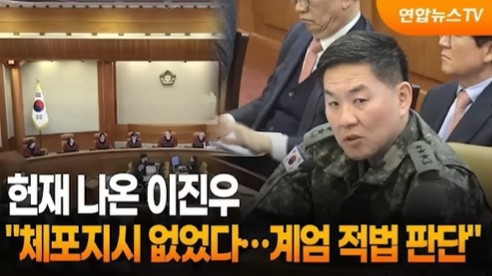
Key to the defense: testimony from military officials like Capital Defense Commander Lee Jin-woo, who reportedly refuted claims that Yoon ordered the arrest of lawmakers. According to this account, commanders used the term "arrest" on their own initiative to manage what they characterize as violent protests, not following presidential orders.
The Election Fraud Justification
A central pillar of Yoon's defense involves allegations of what his team calls a "global election fraud cartel" involving South Korea's National Election Commission (NEC) and the Association of World Election Bodies (A-WEB).
The defense claims the NEC maintained dangerously weak security protocols-including allegedly using "12345" as a password-and refused to cooperate with national security audits. They argue the military's entry into NEC facilities during martial law wasn't insurrection but a legitimate attempt to secure election servers and investigate potential manipulation.
The defense points to what they describe as suspicious evidence: "Japanese flag" ballots and "cabbage leaf" printouts. Under this narrative, martial law gave the President authority to oversee state functions and ensure democratic transparency.
Whether these claims hold up under scrutiny remains to be seen. Critics argue they're conspiracy theories designed to justify authoritarian actions.
Conservative Camp Fractures
The martial law crisis has triggered brutal internal warfare within the ruling People Power Party. The party's ethics committee has officially recommended expelling Han Dong-hoon, citing "grave acts of party harm" and allegations he manipulated public opinion using AI-driven "macro bots" and organized online comment campaigns.
Han's critics now label him an "enemy of democracy" who put personal political survival above constitutional order. It's a stunning fall for someone who was once seen as a rising star in conservative politics.
The purge extends to Lee Jun-seok, accused of aligning with "pro-China" interests. Critics point to his condemnation of U.S. actions against Venezuelan leader Nicolás Maduro as evidence he rejects what they call the "power-based order" championed by the incoming Trump administration.
The underlying message from Yoon's camp is clear: in their view, the U.S. sees "anti-China" alignment as non-negotiable, and those who equivocate-like Lee Jun-seok-are increasingly viewed with suspicion.
Economic Arguments and Alliance Politics
Yoon's supporters maintain his actions were designed to stabilize an economy they claim was threatened by "Chinese influence" and fiscal mismanagement. They argue that while Democratic Party policies have allegedly devalued the currency and damaged U.S. relations, Yoon remains focused on strengthening the liberal democratic alliance and removing what they characterize as "anti-state" elements from political and electoral systems.
This framing conveniently positions Yoon's actions within a broader geopolitical narrative about defending democracy and the U.S. alliance-rather than as an authoritarian power grab.
The Death Penalty Question
The prosecution's demand for the death penalty represents an extraordinary escalation. South Korea rarely executes anyone-the last execution was in 1997-making this more of a symbolic gesture than a likely outcome.
But symbols matter in politics. The demand signals just how seriously prosecutors view Yoon's actions. They're not treating this as a policy disagreement or even a legal gray area-they're characterizing it as a fundamental attack on democratic order worthy of the ultimate punishment.
Refusing to Apologize
As legal proceedings continue, Yoon's refusal to apologize is being framed two completely different ways depending on who's talking.
His supporters call it a commitment to "historic re-evaluation" of martial law as a legitimate tool for national salvation. They see him standing firm on principle, refusing to back down from what he believes was necessary action.
His critics see stubborn authoritarian tendencies, a leader so convinced of his own righteousness that he can't acknowledge potentially catastrophic mistakes.
The truth, as usual, probably lies somewhere in the complicated middle. But in South Korea's hyperpartisan political climate, there's little room for nuance. You're either with Yoon or against him-and the stakes couldn't be higher.
What Happens Next
The trial will ultimately determine whether Yoon's martial law declaration was a legitimate emergency measure or an unconstitutional seizure of power. The evidence will matter, but so will politics.
If Yoon is convicted, it could fundamentally reshape South Korean politics and the conservative movement. If he's acquitted, his supporters will claim vindication and likely pursue aggressive action against their political opponents.
Either way, South Korea's democracy faces a critical test. Can its institutions handle this crisis while preserving both stability and the rule of law? The world is watching to find out.


