

FBI Raids Georgia Election Office, Investigation Eyes South Korean Voting Technology Links


A massive FBI raid in Georgia has triggered international attention as investigators examine potential connections between voting irregularities and South Korean election technology exports. The operation, targeting records from the 2020 presidential election, has placed South Korea's election management organizations under unexpected scrutiny.
700 Boxes Seized in Fulton County
FBI agents recently descended on the Fulton County Board of Elections, walking out with over 700 boxes of voting materials and electronic records. The raid, reportedly witnessed by Tulsi Gabbard-the incoming Director of National Intelligence-signals just how seriously the Trump administration is taking this investigation.
At the center of the probe is a stunning allegation: that 315,000 votes were counted in Georgia without proper legal certification during the 2020 election. Investigators are particularly focused on "tabulation tapes"-certificates proving a voting machine was reset to zero before counting began.
The problem? In Fulton County, many of these tapes allegedly lack required observer signatures. Without those signatures, there's no way to verify whether machines were properly reset, raising concerns about potential double-counting from previous days.
How Did South Korea Get Involved?
Here's where things take an international turn. According to sources familiar with the investigation, FBI agents are tracing the origins of suspicious ballots and fake IDs. Some evidence reportedly points toward China and South Korea.
That's brought the Association of World Election Bodies (A-WEB)-headquartered in South Korea-into the spotlight. A-WEB has been exporting electronic voting systems and what they call "comprehensive election solutions" to countries around the world, including Ecuador, the Philippines, El Salvador, and the Democratic Republic of the Congo.
The systems are often manufactured by Korean firm Miru Systems. And here's the concerning pattern: countries that adopted these systems have frequently experienced election fraud allegations and public unrest afterward.
The most damning precedent comes from 2008, when the Philippine Supreme Court flat-out rejected South Korean electronic voting programs. Their reasoning? The systems were highly susceptible to manipulation and could potentially collapse the entire electoral system.
South Korea's Own Security Problems
The investigation has also exposed troubling details about South Korea's National Election Commission (NEC) security practices. Sources allege the NEC maintained shockingly weak protocols, including using "12345" as a password for critical systems.
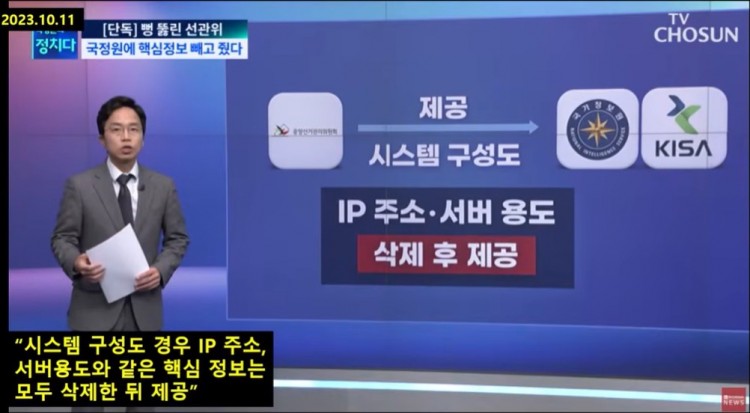
Even more concerning: the NEC reportedly outsourced security to Winz, a firm with alleged connections to the previous Moon Jae-in administration. Data shows that while typical government agencies faced cyber-attack attempts at normal rates, the NEC was targeted 184 times more frequently-yet allegedly refused to provide server data or IP addresses for transparency reviews.
This security nightmare is being cited by some as justification for President Yoon Suk-yeol's controversial declaration of martial law, which supporters frame as necessary to secure the NEC from foreign hacking and internal threats.
Trump's "Global Election Fraud Cartel" Theory
President-elect Donald Trump and his team are viewing these developments through a specific lens: what they're calling a "Global Election Fraud Cartel" that has compromised elections throughout the Americas.
Sources suggest that former Venezuelan leader Nicolás Maduro, currently in U.S. custody, may be providing testimony about how South Korean-linked systems were allegedly used to manipulate elections across Latin America. Whether that testimony is credible remains to be seen, but it's clearly influencing the investigation's direction.
What Happens If the Links Are Real?
As FBI analysts work through those 700 boxes from Georgia, the "South Korean connection" is becoming a focal point. If investigators determine that South Korean organizations knowingly facilitated election manipulation-whether in the U.S. or elsewhere-the diplomatic fallout could be severe.
We're potentially looking at Department of Justice indictments, trade sanctions, and a fundamental reassessment of how democracies share election technology. The irony isn't lost on observers: South Korea, itself a democracy, could be accused of undermining democratic processes globally.
Separating Signal from Noise
It's worth stepping back and acknowledging the complexities here. Not every election that uses electronic voting systems experiences fraud. Not every allegation of irregularities proves true under scrutiny. And correlation-countries using Korean systems and experiencing problems-doesn't automatically prove causation.
But the pattern is concerning enough that federal investigators are taking it seriously. The Philippine Supreme Court's 2008 rejection of these systems wasn't based on conspiracy theories-it was based on technical security assessments.
The real questions are: Did South Korean firms knowingly export vulnerable systems? Did A-WEB's certifications provide false assurance of security? And most critically for Americans: did any of this actually affect U.S. elections?
As the investigation continues, we'll likely get answers to at least some of these questions. What's already clear is that the global trade in election technology-and the organizations that facilitate it-needs far more scrutiny than it's received.
For South Korea, this investigation represents a potential diplomatic crisis. For American election integrity, it could provide long-sought answers. And for democracies worldwide, it might finally force an overdue conversation about who makes our voting machines and whether we can trust them.


