

Korean Film Critics Clash Over 'The Great Flood' as Netflix Movie Tops Global Charts


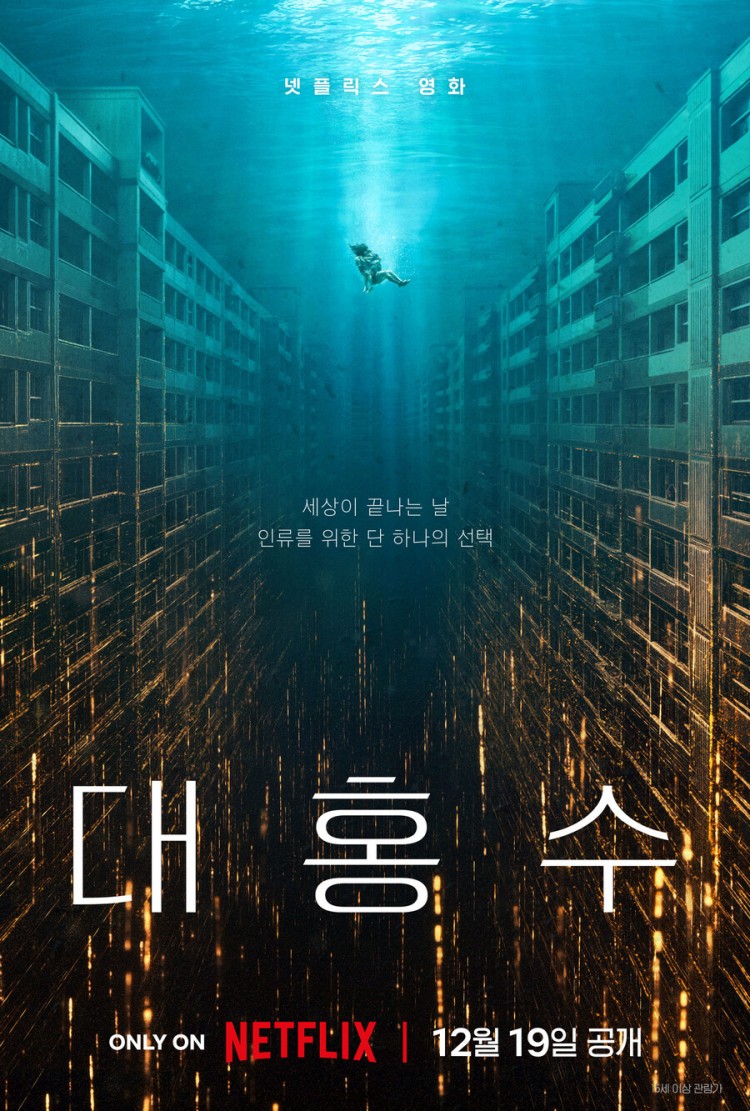
South Korea's entertainment industry erupted into an unexpected debate about modern film criticism after Netflix's disaster thriller "The Great Flood" reached #1 worldwide despite sharply divided viewer reactions.
The Korean sci-fi film claimed the top spot on Netflix's global movie chart on December 21-22, according to FlixPatrol data. Director Kim Byung-woo's apocalyptic thriller dominated in 71 countries and cracked the Top 10 in 92 markets, including two consecutive days at #1 in the United States.
Yet the film's international success arrived alongside intensely polarized reviews and a cultural reckoning about how audiences engage with creative work in the streaming era.
The Controversy That Sparked Industry Backlash
"The Great Flood" presents a deceptively simple premise: AI researcher An-na (Kim Da-mi) awakens to find Seoul submerged after an asteroid melts Antarctic ice sheets. Trapped in a flooding apartment with her six-year-old son, she encounters security operative Hee-jo (Park Hae-soo), who reveals a mission involving artificial intelligence and humanity's survival.
The 106-minute film marketed itself as a straightforward disaster thriller but pivots dramatically into science fiction exploring consciousness and human evolution. This unexpected genre shift ignited fierce debate among Korean viewers, with the film scoring just 3.84 out of 10 on Naver while reaching 60% on Rotten Tomatoes' critics score (though only 42% with audiences).
Comments ranged from praise-"Fresh once I understood the concept"-to frustration: "Too convoluted and difficult to follow."
Writer and Translator Defend Film Against "Excessive" Attacks
The polarization prompted two prominent industry figures to publicly criticize what they characterized as overly harsh and personal attacks on filmmakers.
Writer Heo Ji-woong, a former film critic, posted a lengthy statement December 23 addressing the backlash. "Recent opinions about a certain film are swinging between extremes. I genuinely think people are being ridiculous," he wrote, clarifying he meant "The Great Flood."
Heo argued that instant streaming access has fundamentally changed how audiences value content: "We live in an era where the perceived cost of watching a work approaches zero. Content that fails to satisfy viewers' dopamine needs from the start doesn't just get ignored-it faces outright condemnation."
He compared aggressive negative reviews to "delivery platform complaints" and told creators: "They're screaming at you to give up, but they haven't spent even one-thousandth of the time you spent deliberating. So stay strong."
Film translator Hwang Seok-hee, known for translating "Deadpool" and Marvel films, also weighed in December 23. "I've been noticing for years that audiences' reviews are getting harsher, and as reviews get saltier, expressions become more extreme," he wrote.
Hwang criticized comments that go beyond disliking a film: "Don't watch this even if you're dying, the distributor should fail, I hope the director never makes another film.' If you don't like it, you don't like it-but is this level really necessary?"
He added: "Self-expression should be about revealing yourself, not erasing others. Ticket prices rose 30% but audience expectations seem to have risen 200%. Now there's no place for average films."
Director Expected Divisive Response
Director Kim Byung-woo, whose previous credits include "The Terror Live," acknowledged anticipating the polarized reception. "I actually predicted this to some extent before filming," he said. "I didn't make this thinking 7-9 out of 10 people would like it."
He expressed gratitude even for negative engagement: "There are films where after watching, you have nothing to talk about. Some people apparently think I've already retired. Just the fact that people are talking about 'The Great Flood' is deeply appreciated."
The director revealed the film originated from watching his sister become a mother: "Seeing her holding the baby brought tears to my eyes. Watching my sister become a mother helped organize the keywords I'd been carrying," eventually leading him to Noah's Ark as a narrative framework.
Production and Reception
The film employed advanced "dry-for-wet" filming techniques alongside actual underwater sets, with cast members undergoing extensive diving training. The production deliberately blends disaster thriller elements with philosophical science fiction examining AI development and human emotion.
Despite mixed Korean reviews, the film's global performance demonstrates Netflix's ability to generate worldwide interest even amid controversy. Park Hae-soo, who previously starred in "Squid Game," noted the script "wasn't written to be easily understood at first glance," which drew his interest.
The heated discourse surrounding "The Great Flood" extends beyond a single film's reception. Both Heo and Hwang emphasized that thoughtful criticism differs fundamentally from personal attacks on creators, with Heo stating: "If you choose to condemn something, you should at least have minimal logical reasoning for it."
"The Great Flood" remains available on Netflix worldwide, where it continues drawing both viewers and passionate reactions. The film's success-reaching #1 globally while simultaneously generating one of the most public debates about criticism culture in recent Korean entertainment history-reflects evolving tensions between creators, critics, and audiences in the streaming age.


