

Ticketmaster's Own President Just Confirmed the Queue Isn't Random. K-Pop Fans Have Been Saying This for Years.


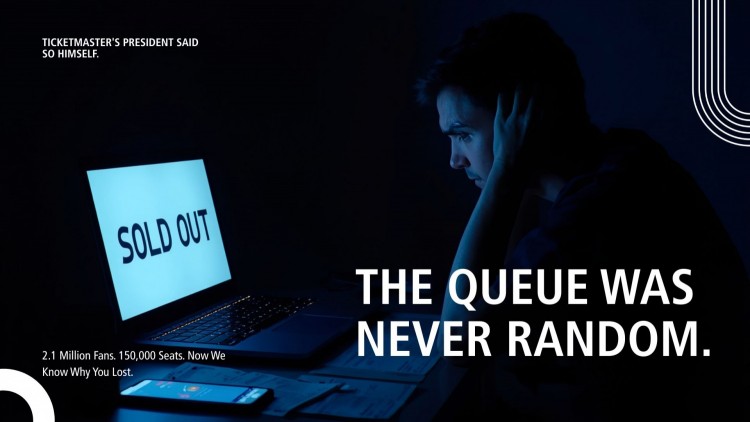
Saumil Mehta, Ticketmaster's global president, told fans on X on May 13 that he could not find any company messaging describing its virtual queue as randomized - and inadvertently handed ammunition to every K-pop fan who spent years watching their queue position hit 80,000 while someone else's account sailed through at 200.
The exchange started when a fan complained about consistently poor queue placement across dozens of sales. The fan described a pattern many users recognize: one account landing deep in line, sale after sale, while a parent's account and a friend's regularly landed near the front. "It has previously been mentioned by TM that queue positions are random," the fan wrote. Mehta's reply: "I don't know where this notion that queue positions are random came from. I have never said it, and I have asked internally and cannot find it written in help content."
Fans immediately surfaced a 2018 post from Ticketmaster's official account stating exactly that - queue placements are randomly assigned. Mehta had no immediate response to the contradiction.
The timing cuts deep for K-pop fans. On May 7, 2.1 million people competed for 150,000 BTS tickets in Mexico City. The 136,400 seats that sold in under an hour went largely to whoever the queue algorithm decided to advance - a process fans now have on record Ticketmaster cannot describe as fair or random. Scalpers listed seats for $3,500 within hours of the sale closing.
This is not a new complaint, and it is not limited to BTS. Every major K-pop on-sale - BLACKPINK's Born Pink tour, Stray Kids' MANIAC run, SEVENTEEN's New__ stadium dates - has produced the same pattern: a fraction of fans get through, resale prices spike immediately, and the official queue is blamed. What Mehta's comments add is something different: an admission, at the presidential level, that the company has no clear answer for how the queue actually works.
The question Mehta did not answer is the one that matters most. If queue placement is not random, what determines it? Fans responding to the thread proposed account history, purchase behavior, device type, and fraud-risk scoring as possible factors. Mehta rejected one user's suggestion that Ticketmaster prioritizes resellers based on buying habits - "Absolutely not" - but did not replace it with any alternative explanation of what does determine position. One fan noted that an account used primarily to transfer tickets out to resale platforms consistently received queue numbers below 2,000. Mehta did not address that.
The revelations arrive as Live Nation - Ticketmaster's parent - is in the middle of a historic legal reckoning. In April 2026, a federal jury found the company had unlawfully maintained a monopoly in ticketing services at major concert venues. The Department of Justice and 33 state attorneys general had pursued the case after a 2024 filing; the jury's verdict rejected a DOJ settlement that states had already refused. Remedy hearings, which could include structural breakup, are pending.
For K-pop fans in particular, the structural issue is not abstract. South Korean President Sheinbaum's office wrote directly to Seoul about BTS Mexico dates. Mexico is the fifth-largest K-pop market, and getting tickets through official channels for a first visit in nine years required either luck, pre-registered fan club membership, or several thousand dollars on the secondary market. Mehta told another user he was willing to look into specific cases. He has not posted a follow-up.


