

South Korea's Election Watchdog Is Under Criminal Investigation. The Protests Are Now in Their Second Week.


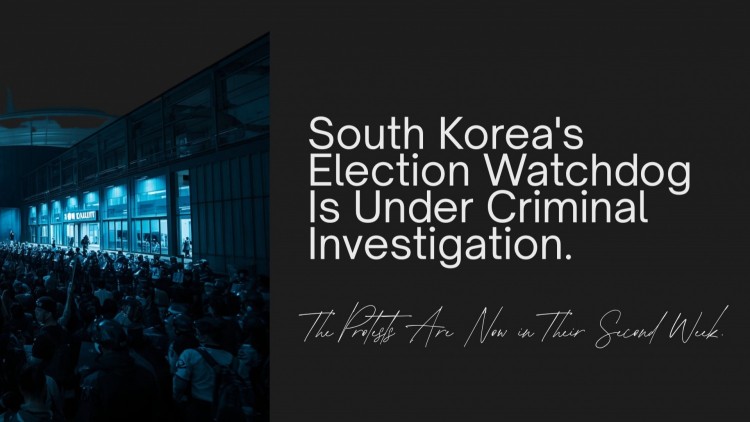
On June 3, ballot papers ran out at 26 polling stations across Seoul - more than 30 nationwide - during South Korea's first major vote since President Lee Jae-myung took office. Some voters left without casting ballots. The NEC chairperson resigned three days later. A joint police-prosecutor team has since raided seven locations, including NEC headquarters, and seized server data. As of this writing, protesters are still gathered outside the SK Olympic Handball Gymnasium in Seoul's Jamsil district - the site used as a ballot counting center - demanding a rerun. The blockade is now in its fourteenth day.
What began as an administrative failure has become a test of South Korea's democratic institutions, arriving just eighteen months after the country's last institutional crisis ended with a president in jail.
What Happened on Election Day
The June 3 local elections were the first nationwide polls since Lee won a snap presidential election in June 2025, following the Constitutional Court's April 2025 ruling upholding the impeachment of former President Yoon Suk-yeol over his December 2024 martial law declaration. The local races were widely seen as a referendum on Lee's first year in office.
The NEC's explanation for the shortage is specific: ballot papers had been printed for approximately 50 percent of eligible voters, based on a calculation that factored in rising early-voting rates and historically low turnout in recent elections. The calculation was wrong. Turnout ran higher than projected, and the margin wasn't close enough to trigger contingency protocols at 26 stations before supplies ran out.
The commission extended voting hours at affected stations. It apologized. Its chairperson, Rho Tae-ak, resigned on June 6. The NEC then determined the shortages did not meet the legal threshold for invalidating results under South Korean election law - a position its lawyers maintain, and which has not been overturned by any court ruling.
Lee's Democratic Party won most local races. It did not flip the Seoul mayoral seat, which remained with conservative Oh Se-hoon - a result opposition figures and independent observers cited as evidence that the election outcome was not simply engineered in the ruling party's favor.
The Investigation
President Lee ordered a joint police-prosecutor investigation on June 7, describing voting rights as "a constitutional right that must never be restricted" and criticizing the NEC's crisis response as inadequate. The investigation is focused on two questions: whether NEC officials exerted improper influence over the ballot printing process, and whether the commission's response to the shortages on Election Day met its legal obligations.
On June 12, the joint team raided seven locations including NEC headquarters and seized internal message records and server data. Frontline election officials from affected districts are expected to be questioned first, followed by senior officials including the former chairman. No charges have been filed as of June 17.
The probe is being conducted by institutions that report ultimately to the Lee administration - a structural tension that critics from the People Power Party (PPP) and independent observers have flagged. Former Justice Minister Han Dong-hoon, who won a by-election on June 3 and returned to the National Assembly as an independent, has proposed legislation to restructure NEC oversight. Seoul Mayor Oh Se-hoon called the ballot shortages "a violation of voting rights."
What the Protests Are - and What They Are Not
The demonstration at the Jamsil handball stadium began on June 5 and peaked over the weekend of June 7-8, when unofficial police estimates placed the crowd at between 10,000 and 20,000, with some social media reports claiming higher figures. By June 15, around 200 protesters remained, with larger gatherings expected after dark.
Seoul Economic Daily's reporting on the June 7 demonstrations offered a granular portrait: university student councils from institutions across the country posted statements calling for NEC accountability. The protesters were predominantly in their 20s and 30s. Organizers explicitly asked participants not to bring American flags or engage with far-right fringe groups, and the Seoul Economic Daily noted a deliberate effort to "draw a line against far-right" contingents that had been spreading unverified fraud claims online.
That distinction matters. Two things are simultaneously true: the ballot shortage was a real, documented institutional failure that disrupted voting for an unknown number of citizens, and a parallel wave of conspiracy theories - amplified by jailed former President Yoon's supporters and right-wing YouTube channels - has layered unverified fraud allegations on top of the confirmed facts.
What's Confirmed, What's Alleged, and What's Been Debunked
Confirmed: Voting was temporarily suspended at 26 polling stations in Seoul and others nationwide. The NEC chairperson resigned. Prosecutors and police have raided NEC facilities and are actively investigating. No court has ordered a rerun election.
Under investigation: Whether NEC officials improperly influenced the number of ballots printed, and whether the commission's Election Day response was legally adequate.
Alleged but unverified: That the shortage was deliberate rather than the result of a miscalculated turnout model. No evidence supporting deliberate manipulation has been publicly presented by investigators.
Debunked by AFP fact-checkers: A widely circulated CCTV clip purportedly showing workers tampering with ballot seals in Ulju County showed a standard security procedure for reattaching seals, monitored by observers from multiple political parties. The NEC confirmed the footage. An independent expert retained by AFP called the tampering allegations "groundless." Separately, claims that Chinese tourists exploiting South Korea's September 2025 temporary visa-free entry program had voted illegally were also fact-checked; NEC called those specific allegations "baseless," and no evidence of foreign nationals casting ballots has been presented.
The Larger Frame
South Korea has now experienced two consecutive institutional crises involving its election administration infrastructure - Yoon's 2024 claims about North Korean threats to NEC voter data (which the commission denied and which triggered his martial law declaration), and now a documented operational failure that has revived many of the same credibility questions.
The country's Constitutional Court, prosecution, and police all functioned as intended during Yoon's impeachment - institutional resilience under pressure. Whether those same institutions can conduct a credible, independent investigation of an election body while reporting to the administration that benefited from that election's results is the question that the next phase of the NEC probe will begin to answer.
The ballots in Jamsil are still inside the gymnasium. The protesters outside are still there. The court hasn't moved. The investigation hasn't concluded. South Korea has been here before - a political crisis with institutional stakes and no clean resolution in sight. The last one took five months.


