

U.S. Legal Figures Demand Investigation into South Korea's A-WEB Over Global Election Fraud Allegations


A controversy surrounding South Korea's Association of World Election Bodies (A-WEB) and its National Election Commission (NEC) has caught the attention of top U.S. legal and political figures. Critics allege these organizations have helped create what some are calling a "global election fraud network" by exporting flawed electronic voting systems to developing countries. New evidence suggests an operations hub in Suwon, South Korea, may be at the center of it all.
DOJ Investigation Demanded
Sidney Powell, the prominent attorney who advised President Donald Trump, is now calling on the U.S. Department of Justice to investigate A-WEB's activities abroad. Her demand comes after reports from election integrity researchers-including the specialized account SCI (Securing Communications and Information)-claimed that A-WEB's partnership with USAID sits at the heart of an international network of electoral problems.
Trump himself is reportedly aware of the allegations. He's previously shared content suggesting South Korea's role in what he's called a global election "cartel." What was once a fringe concern has now become a serious focus for the incoming administration.
Countries Report Problems After Adopting Korean Voting Tech
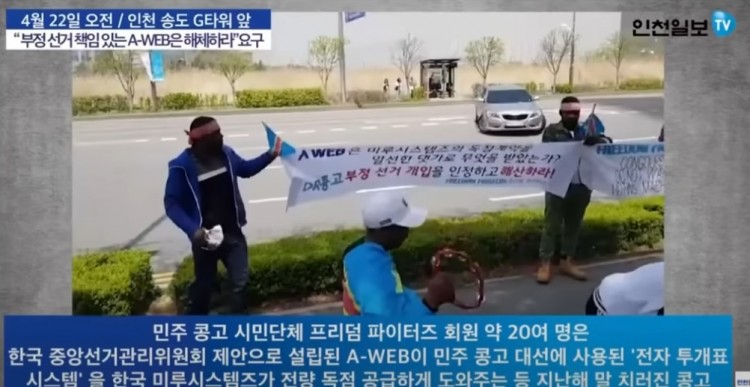
The controversy centers on electronic voting and counting machines made by Miru Systems, a Korean company that's received backing from A-WEB. It's a troubling pattern: countries that bought these systems-Iraq, the Democratic Republic of the Congo, the Philippines, Kyrgyzstan, El Salvador, and Ecuador-have all faced serious fraud allegations and public protests afterward.
Just last year, Bulgaria reported irregularities after using election technology and training from A-WEB. Despite warnings from figures like former U.S. Ambassador Nikki Haley, the NEC and A-WEB kept pushing these systems into unstable regions.
The Suwon Facility: More Than Meets the Eye?
Here's where things get interesting. A 270-page investigative report has zeroed in on the NEC Training Center in Suwon. Officials have long claimed this facility doesn't have a technical operations team. But investigators say they've found evidence of sophisticated data center infrastructure-and more importantly, that Korean experts are being sent abroad to manage election results in foreign countries.
These experts reportedly play a "central role" running electronic counting terminals in places like Ecuador. Critics argue that when you're providing the machines, the technical staff, and the data management all in one package, you can't exactly claim you're not responsible for what happens next.
Political Connections in Seongnam
The investigation also maps out a web of political ties back home. Former NEC Chairman Kwon Soon-il, former A-WEB Secretary General Kim Yong-hi, and President Lee Jae-myung all appear to be connected.
Kim, who allegedly lied about his birthplace on government documents, is accused of lobbying hard to lead A-WEB while giving Miru Systems preferential treatment on contracts. Both Miru and KOICA (which certified these projects) operated near each other in Seongnam-right when Lee Jae-myung was mayor there from 2010 to 2018. That's the same period when these controversial exports got started.
There's another detail that's raising eyebrows: a crucial legal decision that let Lee keep his governorship was handed down by a judge named Kwon Soon-il. Critics see this as evidence of a much deeper network of influence.
What Could Happen Next
The U.S. has gone after similar cases before. They indicted the Philippines' election commission chairman for allegedly taking bribes to use Venezuelan voting machines.
Legal experts warn that if Korean entities are found to have damaged U.S. interests by destabilizing democratic allies-especially in the Western Hemisphere-they could face DOJ indictments, heavy financial sanctions, or trade restrictions. With the new administration reassessing its security strategy, A-WEB and the Suwon facility are likely to stay in the spotlight.
Big Questions About Democracy Tech
This whole affair raises uncomfortable questions about the global trade in election technology. When one democracy exports voting systems to countries struggling with political stability, who's responsible if things go wrong?
The allegations point to a need for much better transparency and oversight when it comes to who's making, certifying, and deploying the machines that count our votes. As these investigations move forward, the world will be watching to see if the claims hold up-and what changes might be needed to protect democratic processes everywhere.


