

South Korea's Religious Freedom Crisis: President Lee Jae-myung Faces International Criticism Over Church Crackdowns


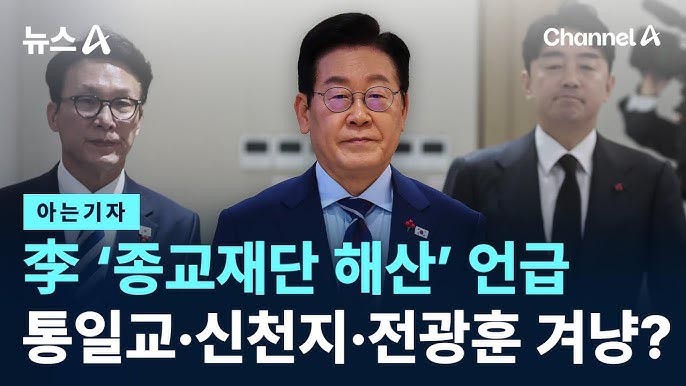
South Korean President Lee Jae-myung is facing mounting international pressure over what critics describe as an unprecedented assault on religious freedom, with conservative Christian leaders detained, churches raided, and proposals to dissolve religious organizations that engage in political activity.
Trump Administration Raises Alarm
The controversy gained global attention when President Donald Trump confronted Lee during his August 2025 White House visit, questioning "vicious raids on churches" in South Korea. Just hours before the meeting, Trump posted on Truth Social: "WHAT IS GOING ON IN SOUTH KOREA? Seems like a Purge or Revolution."
Lee's staff reportedly feared the encounter would become a diplomatic disaster similar to Trump's contentious meeting with Ukrainian President Volodymyr Zelenskyy earlier that year. Former Secretary of State Mike Pompeo warned that the situation represents "intensifying assaults on religious liberty" that betray South Korea's democratic principles.
January 2026 Escalation: "Root Out" Religious Political Involvement
During his January 21, 2026 New Year press conference, Lee intensified his rhetoric against religious groups engaged in politics. He warned that organized religious political participation leads to "national downfall," likening it to "armed rebellion."
"There are places where the sermon title is 'Lee Jae-myung must die for the nation to live,'" Lee stated, promising stricter enforcement. "The current level of punishment seems far too weak," he said, alluding to proposals allowing swift dissolution of religious organizations violating election laws.
Lee specifically targeted the Unification Church (Family Federation for World Peace and Unification) and Shincheonji, urging political parties to use investigations into these groups as an opportunity to eliminate religious political involvement entirely.
The Pastor Son Hyun-bo Case
The most prominent case involves Pastor Son Hyun-bo, senior pastor of Segero Church in Busan, one of South Korea's largest evangelical congregations with approximately 10,000 weekly attendees. Pastor Son, a former special forces soldier, was arrested on September 8, 2025 for alleged violations of the Public Official Election Act.
The charges stem from interviewing an education superintendent candidate during a church service for approximately nine minutes, holding a prayer meeting at the candidate's campaign office, and posting related content online. Prosecutors have requested at least one year in prison.
Pastor Son had previously been vocal in criticizing Lee's administration and supporting conservative candidates. During a rally before his arrest, Son used inflammatory rhetoric, stating "Lee Jae-myung has to die for Korea to live"-language his supporters describe as metaphorical religious speech similar to the book title "If Confucius Dies, the Nation Lives," referring to Lee's political ideology rather than physical violence.
Lee himself survived an assassination attempt in January 2024 when he was stabbed in the neck during a construction site visit in Busan, making the rhetoric particularly sensitive.
Pastor Son has been detained since September without conviction, held in pre-trial detention with authorities citing flight risk and evidence destruction concerns-claims his family calls absurd given his 30-year ministry at the same church and the public nature of all his statements. A final verdict is expected January 30, 2026, though he faces 16 ongoing lawsuits.
Proposal for Japan-Style Religious Organization Dissolution
On December 2, 2025, Lee used a Cabinet meeting to instruct the Ministry of Government Legislation to examine creating legal mechanisms similar to Japan's dissolution of religious corporations. He cited Japan's dissolution order as a precedent worth examining and requested an execution plan detailing which ministries would be responsible and what legal changes would be necessary.
This follows Japan's 2024 dissolution order against the Unification Church, marking the first such action against a religious organization in decades. Critics warn that adopting similar measures could give the state unprecedented power to target religious groups deemed politically problematic.
Broader Pattern of Religious Leader Detentions
Pastor Son is not alone. Dr. Hak Ja Han Moon, 82-year-old co-founder and spiritual head of the Family Federation for World Peace and Unification (which owns The Washington Times), was arrested September 22, 2025 on bribery and embezzlement charges. Nearly blind with a heart condition, she has been confined to a 70-square-foot cell at Seoul Detention Center, enduring interrogations lasting 10-12 hours with only 10 minutes of visitation daily.
Other targeted religious leaders include Pastor Jeon Kwang-hoon, whose home was raided and who is forbidden from leaving South Korea pending investigations, and Pastor Lee Young-hoon of Yoido Full Gospel Church (one of the world's largest Pentecostal congregations), whose church was raided by special prosecutors.
International Reaction and U.S. Concerns
Former House Speaker Newt Gingrich expressed outrage on Fox News: "We are watching our ally in South Korea, which is headed up by basically a pro-communist government, literally and methodically destroying Christianity. It is an astonishing assault."
The timing is particularly sensitive as South Korea commemorates the 75th anniversary of the Korean War, during which 36,574 Americans died defending South Korea's freedom. Many U.S. lawmakers and faith leaders argue that religious liberty was a core value American soldiers fought to protect.
Grant Newsham, a retired U.S. Marine officer and former diplomat, wrote in Fox News: "Lee probably couldn't believe his good fortune. He had avoided the Zelenskyy treatment-a dressing down in the White House-and could go home saying the Americans approved of him and his administration." Newsham noted that Lee subsequently "stepped on the gas" with continued targeting of religious organizations despite Trump's restraint.
Constitutional Debate: Separation of Church and State
Lee's administration argues that organized religious political participation violates South Korea's constitutional separation of church and state. However, critics contend this interpretation fundamentally misunderstands the principle's historical purpose.
The separation doctrine, rooted in U.S. and Western tradition, was designed to prevent state interference in religion-not to bar religious citizens from political participation. Religious activism has historically driven democratization movements, from Martin Luther's 95 Theses to the U.S. War of Independence.
Critics also note apparent double standards. While Lee's administration targets conservative religious groups, it has remained silent regarding left-leaning Catholic and Protestant organizations that held "emergency prayer meetings" and issued declarations calling for former President Yoon Suk-yeol's resignation and impeachment.
Additionally, Lee's Democratic Party faces allegations of connections with Daesoon Jinrihoe, a Korean religious movement with reported progressive political ties, though the party rejects calls to investigate these alleged connections.
Lee's Legal Background and Political Context
Lee Jae-myung, 61, is South Korea's 14th president, having won a snap election on June 3, 2025 following the impeachment of conservative President Yoon Suk-yeol. Lee had previously lost the 2022 presidential election to Yoon by a narrow margin.
Lee himself faces unresolved criminal cases involving allegations of bribery, election law violations, and encouraging false testimony, though he maintains the charges are politically motivated. His presidency has unfolded amid deep political polarization following the dramatic impeachment of his predecessor.
As governor of Gyeonggi Province during the COVID-19 pandemic, Lee earned both praise and controversy for "executing enforcement actions against uncooperative religious groups," according to Encyclopaedia Britannica-a precedent that now appears to inform his presidential approach to church-state relations.
Comparisons to China's Religious Control Model
Multiple observers have drawn troubling parallels between Lee's approach and China's state control of religion. Massimo Introvigne, an Italian sociologist of religion and former OSCE representative on religious discrimination, wrote: "Although left-leaning, Lee is not a Communist. Yet he displays a curious fascination with China's model of religious control-a model built on the premise that the state alone decides which religions are legitimate and which must be crushed."
Pastor Rob McCoy, former mayor of Thousand Oaks, California, stated after preaching at Segero Church: "Never in seventy years has the Korean Church been treated this way-not even under Japanese occupation. This is the Communist playbook. Silencing churches. This is not what 36,000 American soldiers died for in the Korean War."
The Korean Legal System's Detention Powers
South Korea's legal system grants prosecutors significantly broader detention powers than common law systems. Brendon Carr, a U.S. lawyer with Seoul-based firm HHC Employment & Labor Law, explains: "Korean prosecutors have much more power to detain prior to indictments and trials because the English Common Law concept of habeas corpus is different. They have up to 20 days to hold someone for investigation without charge, and once indicted, it is almost indefinite."
This system enables extended pre-trial detention that religious freedom advocates argue is being weaponized against political and religious opponents.
Historical Context: South Korea's Cycle of Political Revenge
South Korea has a troubling history of former presidents facing legal prosecution after leaving office. Former President Roh Moo-hyun committed suicide in 2009 amid corruption investigations. The current situation continues what some observers describe as a "brutal cycle of political revenge" following changes of administration.
However, the targeting of religious leaders represents an unprecedented escalation beyond typical political prosecutions. Jan Figel, president of Forum for Religious Freedom Europe, stated: "This is not anti-corruption. It is a purge."
What's Next: Trial Outcomes and International Pressure
Pastor Son's final verdict is expected January 30, 2026. Dr. Han's trial began in late October 2025 but could face delays. The outcomes of these cases will significantly impact South Korea's religious freedom landscape and international reputation.
The Trump administration continues monitoring the situation, with Secretary of State Marco Rubio reportedly expressing concerns based on information from conservative leader Charlie Kirk, who met with Pastor Son just days before Kirk's assassination in September 2025 and Son's subsequent arrest.
Advocates for Faith and Freedom has launched a petition calling for Pastor Son's immediate release, arguing that U.S. leadership must defend the religious liberty American soldiers died to protect during the Korean War.
The International Stakes
As South Korea navigates its relationship with the United States, North Korea, and China, the religious freedom crisis adds complexity to diplomatic relations. The Trump administration's emphasis on religious liberty worldwide places Lee's government under particular scrutiny.
Critics warn that if Lee's approach succeeds, it could embolden other governments to adopt similar tactics against religious groups. The precedent of dissolving religious organizations for political participation could fundamentally alter the relationship between church and state in democratic societies.
As Introvigne warned in his analysis: "To interpret metaphor as a threat is to criminalize religious expression itself." The question facing South Korea-and the international community-is whether political participation by religious citizens constitutes democratic engagement or dangerous interference requiring state suppression.
The answer will shape not only South Korea's future but set a precedent for religious freedom in democracies worldwide.


