

The Score That Broke K-pop Criticism. Pitchfork Gave ARIRANG a 5.3. Everyone Else Gave It an 83.


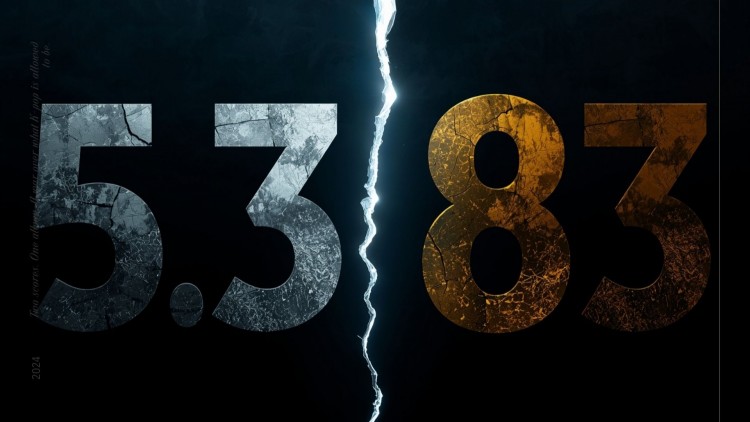
On March 23, Pitchfork published its review of BTS's ARIRANG. Critic Joshua Minsoo Kim assigned it a 5.3 out of 10, called the songs "generic," and wrote that the album demonstrated K-pop's "desire for Western validation and global dominance." The following morning, he posted on X: "I found it pointless and passionless." That tweet drew 1.6 million views.
The same album debuted at No. 1 on the Billboard 200 with 641,000 album-equivalent units - the largest opening week by a group since Billboard began tracking units in 2014. Metacritic's weighted aggregate from nine critics landed at 83, a score the site classifies as "universal acclaim." Rolling Stone gave it 90. Consequence gave it 83. The NME praised its return to Korean cultural roots. The gap between Pitchfork's assessment and the critical consensus isn't a minor disagreement about production choices. It's a 30-point chasm, the kind that happens when two sides are evaluating different things entirely.
This is where it gets interesting. Kim is Korean American, a careful and often incisive critic with deep knowledge of Korean music. His objection wasn't that ARIRANG is too Korean - it was that the Korean identity threaded through the album feels performed rather than felt. The album's title references a 600-year-old folk song. Track 6 is 98 seconds of the Sacred Bell of King Seongdeok tolling in near-silence. "Body to Body" ends with traditional Korean percussion cutting through the contemporary production. Kim found these moves hollow. Rolling Stone found them powerful. Both critics were listening to the same album.
The split maps onto a fault line that has run through Western music criticism for a decade: what do you do with a phenomenon that is simultaneously genuinely artistically significant and the product of a calculated, corporate-scaled machine? Pitchfork has a documented history of punishing exactly this combination - Liz Phair's 2003 pop pivot got a 0.0, not because the songs were bad but because the move felt strategically commercial. The site later acknowledged the bias. The BTS review activates the same reflex, applied to a group whose commercial and cultural ambitions are impossible to separate. Every production decision on ARIRANG - Diplo, Ryan Tedder, Kevin Parker, El Guincho, JPEGMafia - is simultaneously a genuine artistic choice and a market calculation. Pitchfork has always struggled to hold those two things at the same time.
What the 83 consensus got right is harder to articulate but more defensible. ARIRANG is not a flawless album. "2.0" and "they don't know 'bout us" are the weakest stretches - exactly the tracks Kim targeted - where the hip-hop delivery feels like obligation rather than invention. But the album's architecture, its sustained argument about Korean identity in global pop, holds. The decision to name the record after a song that Korean exiles first recorded in the United States in the 1890s - a song of mourning and resistance that predates the K-pop explosion by over a century - is not a branding exercise. It's BTS doing what they have always done: refusing to water down who they are as the price of Western acceptance. The title track "SWIM" topped the Billboard Hot 100. The album has now spent three consecutive weeks at No. 1 on the Billboard 200, the first group to do so since Mumford & Sons in 2012. Neither fact changed the Pitchfork score.
There is one thing Kim got exactly right. "No. 29" - the 98-second bell recording - is the album's most important moment. He called it the most interesting, emotional, and significant song on the record, and praised it even while panning everything around it. That judgment is correct. The bell tolls once, reverberates for nearly two minutes, and disappears. It is the only track on ARIRANG with no producers, no songwriters, no BTS. Just a 1,200-year-old bronze instrument and the silence after. In a 14-track album built around the question of what Korean identity means inside a global pop machine, the answer the group chose for Track 6 was: sometimes it means stepping out of the machine entirely.
Now the tour is in its North American leg, playing to 190,000 people across three nights at Raymond James Stadium in Tampa. The setlist opens with "Hooligan" and closes with "Into the Sun," and somewhere in the middle the crowd sings along to "Body to Body," including the 30-second Korean folk melody and traditional percussion passage that Kim found hollow and everyone else found moving. Raymond James Stadium holds 65,000 people. They all know the words.
Pitchfork's review didn't hurt ARIRANG. It didn't help it either. What it did was clarify something the music press has been working around for years: at a certain scale of cultural phenomenon, the vocabulary of independent music criticism - built around the idea that commercial success is suspect and cultural identity claims require proof - stops being adequate to the subject. BTS left that scale behind a decade ago. The 5.3 isn't a verdict on the album. It's a verdict on the limits of the framework.


